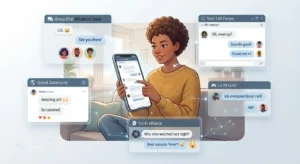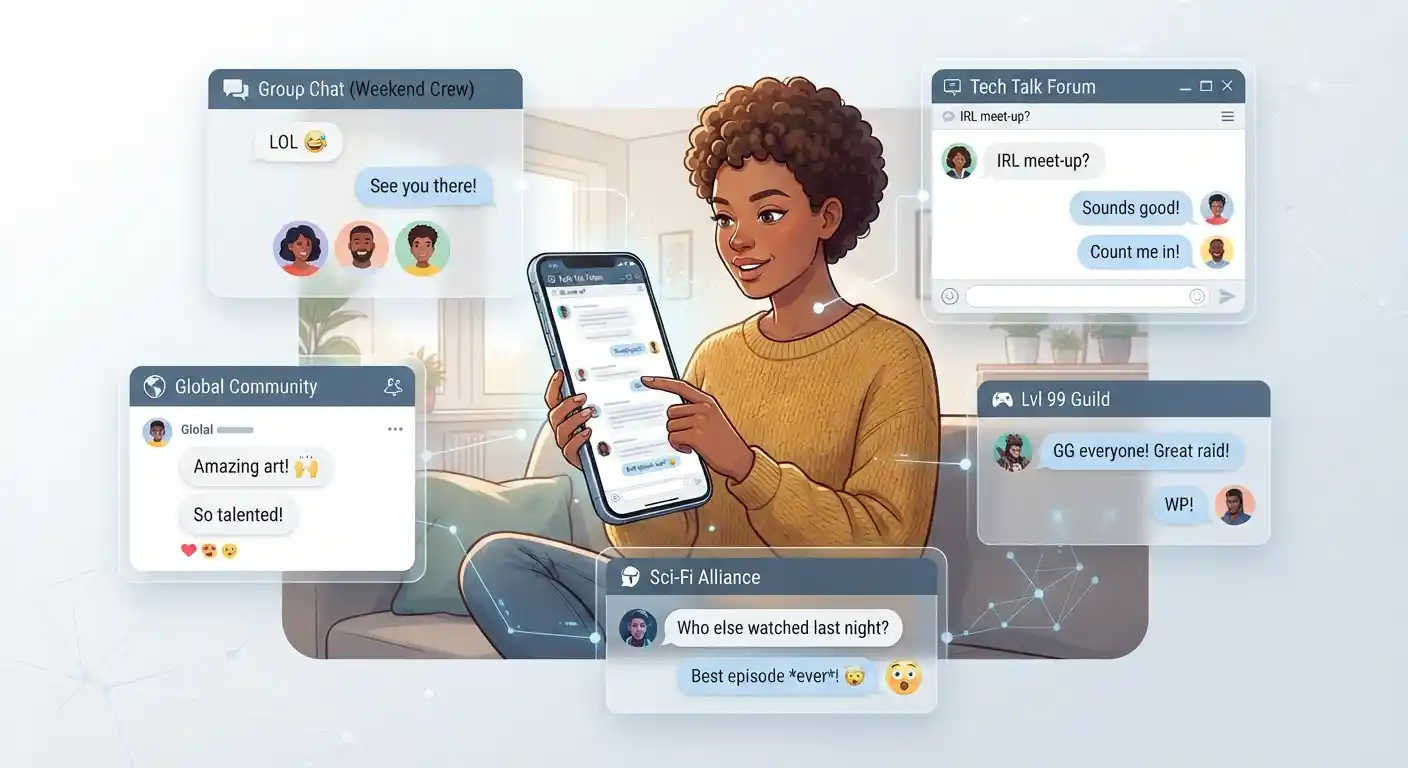
Online community slang refers to informal words, abbreviations, phrases, and inside jokes used by people in online groups and communities. Its meaning often depends on the platform, shared interests, and context of the conversation.
Key Takeaways
- Online community slang is informal language shared by members of an online group or community.
- It can include abbreviations, memes, phrases, reaction terms, and inside jokes.
- The same term may have different meanings in gaming, social media, fandoms, forums, or group chats.
- Context is important because many community terms are not meant to be interpreted literally.
- Some slang stays within a niche community, while other terms spread into everyday online communication.
- Understanding the conversation and community helps prevent misunderstandings.
Online Community Slang Meaning in Text
Online community slang is a broad term for the informal language people use within digital communities. It may include text slang, internet slang, messaging shorthand, memes, abbreviations, and phrases that community members understand.
Unlike a single texting abbreviation, online community slang does not have one fixed definition or one specific use. It describes a category of language that develops or becomes popular among people who interact online.
For example, a gaming community may use terms such as GG or noob, while social media communities may use reaction words such as LOL, IMO, or IRL. Other groups may create their own phrases based on shared experiences, jokes, trends, or interests.
The tone is usually casual and informal, but the meaning can be highly context-dependent.
What Does Online Community Slang Stand For?
Online community slang is not a traditional acronym, so it does not have one fixed full form.
It is a descriptive phrase:
- Online refers to internet-based communication.
- Community refers to a group of people connected by shared interests, platforms, activities, or conversations.
- Slang refers to informal words or expressions used in casual communication.
Together, the phrase describes informal language associated with online groups and digital communities.
How Is Online Community Slang Used?
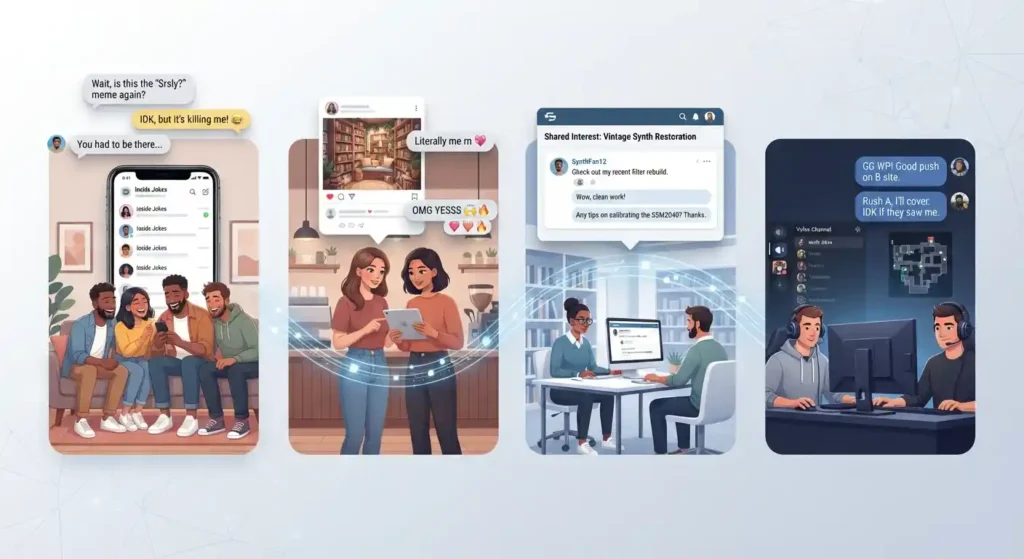
Online community slang appears in many forms of digital communication. The words people use often depend on the type of community they are part of.
Text Messages and DMs
People may bring internet slang from online communities into private messages.
For example:
- “That post was so relatable LOL.”
- “IDK what happened in the chat.”
- “BRB, I’ll message you later.”
Group Chats
Group chats often develop their own slang and inside jokes over time.
Members may shorten repeated phrases, reference past conversations, or use reaction terms that make sense mainly to people in the group.
Social Media
Social media slang can spread through posts, comments, memes, and short videos.
Terms may become popular quickly, but their meaning can change depending on how different communities use them.
Online Forums and Communities
Forums and interest-based communities often have specialized language connected to their topic.
A community focused on technology, sports, entertainment, hobbies, or other interests may use terms that outsiders do not immediately understand.
Gaming
Gaming communities commonly use shorthand to communicate quickly during or around games.
Examples can include terms related to performance, teamwork, strategy, or reactions.
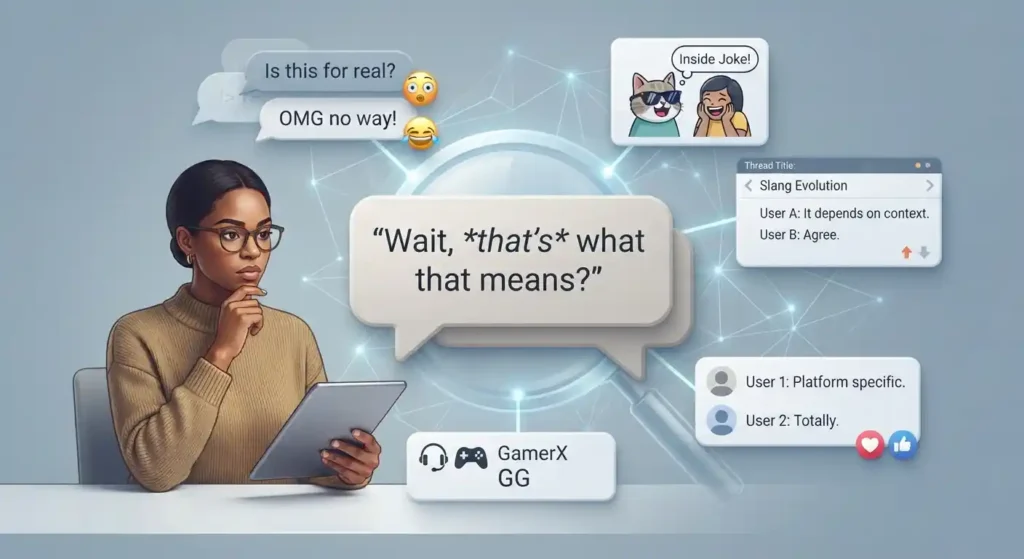
Online Community Slang in Different Contexts
The meaning of community slang can change depending on where and how it appears.
In a Group Chat
A term may be part of an inside joke or shared reference. Someone outside the group may not understand the meaning without additional context.
In Social Media Comments
Slang may be used as a reaction, joke, opinion, or reference to a current trend.
In Gaming Communities
Terms may have meanings connected specifically to gameplay or gaming culture.
In Fandoms
Fans of movies, shows, music, books, or other entertainment may use community-specific names, phrases, or references.
Between Friends
Friends often borrow slang from online communities and use it casually in everyday conversations.
The meaning usually depends on the previous messages, conversation topic, wording, punctuation, emojis, and shared knowledge. A slang term by itself does not automatically reveal someone’s feelings or intentions.
Real Chat Examples
Here are realistic examples of how online community slang and community-style language can appear in conversations:
- A: Did you see that post?
B: Yeah, LOL. The comments are wild. - A: Are you joining the game later?
B: GG if I have to leave early. - A: IDK what everyone is talking about.
B: It’s an old joke from the group. - A: That meme is so relatable.
B: Honestly, same. - A: BRB, getting food.
B: Okay, we’ll wait. - A: I just found out what IRL means.
B: Welcome to internet slang. - A: Why is everyone saying that phrase?
B: It’s community slang from an older trend. - A: That comment took me out.
B: Same, I was not expecting that. - A: Is that an inside joke?
B: Pretty much. You had to be there. - A: The group chat has its own language at this point.
B: Seriously, new people must be confused. - A: IMO, the update is better now.
B: I agree. - A: Someone explain the joke to me.
B: It started in the community a while ago. - A: I keep seeing that abbreviation everywhere.
B: It probably spread from a specific online community. - A: That term means something different in gaming.
B: Context really matters. - A: The fandom has a nickname for that character.
B: Yeah, fans use it all the time. - A: I thought they were being serious.
B: No, it was just sarcastic internet slang. - A: Why does everyone in this server say that?
B: It became one of the group’s running jokes. - A: I don’t understand half the comments.
B: You might need to know the community slang. - A: That phrase means something else on this platform.
B: Exactly. The context changes it. - A: I learned that word from a gaming community.
B: Now people use it outside gaming too.
How to Reply to Online Community Slang
Because online community slang covers many different terms, the best reply depends on whether you understand the expression.
Casual Replies
- “LOL, I get it.”
- “Yeah, that makes sense.”
- “Same here.”
- “I know exactly what you mean.”
Friendly Replies
- “Wait, explain that one to me.”
- “I haven’t heard that before.”
- “Okay, now I understand.”
- “That’s actually funny.”
Funny Replies
- “I need a translator for this group chat.”
- “When did everyone start speaking a new language?”
- “Teach me the community lore first.”
Neutral Replies
- “What does that mean in this context?”
- “Can you explain that term?”
- “I’m not familiar with that slang.”
Asking for clarification is often the best choice when a term has multiple possible meanings.
What Tone Does Online Community Slang Have?
Online community slang is usually casual, informal, and context-dependent.
Depending on the term and situation, it can also sound:
- Friendly
- Playful
- Funny
- Sarcastic
- Direct
- Supportive
- Exclusive to a particular group
Some expressions are neutral, while others may sound rude or insulting. The tone depends on the specific slang term rather than the phrase online community slang itself.
Is Online Community Slang Rude or Offensive?
Online community slang is not automatically rude or offensive. However, individual words or phrases can be harmless, sarcastic, insulting, or inappropriate depending on their meaning.
Casual Conversations
Most common internet slang is appropriate when everyone understands the context.
Friends and Group Chats
Slang and inside jokes are common, especially among people who communicate regularly.
Social Media
Slang can help people communicate casually, but unfamiliar terms may confuse readers.
School and Work
Informal community slang may not be suitable for assignments, professional emails, workplace messages, or formal communication.
Formal Writing
It is usually better to avoid slang unless you are specifically discussing internet culture or quoting relevant language.
Other Meanings of Online Community Slang
The phrase online community slang generally refers to a category of informal language rather than a separate acronym or technical term.
Different communities may have their own versions of slang, including:
- Gaming slang
- Social media slang
- Forum slang
- Fandom terminology
- Meme language
- Chat abbreviations
- Platform-specific expressions
These categories can overlap. A term that begins in one community may eventually spread to other parts of the internet.
Common Mistakes About Online Community Slang
Assuming Every Term Has One Meaning
Many slang terms change meaning based on the platform, community, or conversation.
Taking Slang Literally
Some expressions are jokes, exaggerations, memes, or reactions rather than literal statements.
Assuming All Internet Users Know the Same Slang
Online communities develop different language habits. A common term in one group may be unfamiliar in another.
Ignoring Context
Reading surrounding messages is often necessary to understand what someone means.
Assuming Slang Reveals Romantic Intent
A casual slang term or phrase does not automatically prove flirting, attraction, or a particular relationship meaning.
Using Community-Specific Terms in Formal Communication
Slang that works well in a group chat may not be appropriate for school, work, or professional writing.
Online Community Slang and Related Slang
| Term | Meaning | Common Use |
|---|---|---|
| Internet slang | Informal language used online | Social media, chats, forums |
| Text slang | Shortened words and expressions used in messages | Texts and DMs |
| Chat abbreviation | Shortened form of a word or phrase | Messaging and group chats |
| Meme slang | Words or phrases connected to internet memes | Social media and online communities |
| Gaming slang | Informal terms used by gamers | Games, streams, gaming chats |
| Inside joke | A joke mainly understood by a specific group | Friends and online communities |
People Also Ask About Online Community Slang
What is an example of online community slang?
An example could be an abbreviation, reaction phrase, meme term, or inside joke commonly understood within a particular online group. The exact meaning depends on the community and context.
Why do online communities create their own slang?
Shared language can develop naturally when people interact regularly around common interests and experiences. Repeated jokes, phrases, and references can eventually become part of the community’s communication style.
Is online community slang the same as internet slang?
They overlap, but they are not always exactly the same. Internet slang can be used broadly across the web, while online community slang may be more specific to a particular group or interest.
Can online slang have different meanings?
Yes. The same word or abbreviation can mean different things depending on the platform, community, and conversation.
How can I understand unfamiliar online slang?
Look at the surrounding conversation and consider the type of community where the term appears. If the meaning is still unclear, asking for an explanation can prevent misunderstandings.
Does online community slang change over time?
Yes. Online language can change as communities, trends, platforms, and communication habits change. Some terms become widely used, while others remain limited to a specific group.
Is it okay to use online community slang at work?
That depends on the workplace and the specific term. Casual internal chats may allow some informal language, but professional messages and formal communication usually call for clearer, more standard wording.
Conclusion
Online community slang refers to informal words, abbreviations, phrases, memes, and inside jokes used by people in digital communities. It is not a single acronym with one full form or fixed meaning.
The meaning of a specific term depends on the community, platform, conversation, and context. Online community slang is usually casual and informal, but individual expressions can have different tones and levels of appropriateness. When you are unsure what a term means, checking the context or asking for clarification is the safest way to understand it.

Mila Parker is a writer focused on captions and quotes that capture experiences, emotions, and memorable moments. Her three years of work include creating material around travel, lifestyle, relationships, events, social media, entertainment, and aesthetic themes. Mila examines tone, refines phrasing, and structures captions to suit different contexts, occasions, and visual styles.