WTV usually means “whatever” in text messages, chats, and social media. It is an informal texting abbreviation used to show indifference, acceptance, or a dismissive attitude, depending on the conversation and tone.
Key Takeaways
- WTV = “whatever” in most texting and social-media contexts.
- It is a texting abbreviation and shortened form of the word “whatever,” rather than a traditional acronym.
- The tone can be casual, indifferent, playful, annoyed, or dismissive depending on context.
- People commonly use WTV in texts, DMs, group chats, comments, and casual online conversations.
- WTV does not automatically mean someone is angry or upset; the surrounding conversation matters.
- In professional or formal writing, spelling out “whatever” is usually more appropriate.
WTV Meaning in Text
In texting, WTV means “whatever.” People use it as quick messaging shorthand when they do not want to type the full word.
For example, someone might text:
“WTV, you pick the movie.”
Here, WTV means the person does not have a strong preference.
In another conversation, WTV can sound more dismissive:
“WTV. I’m done arguing about it.”
The basic meaning stays the same, but the tone changes because of the wording and situation.
WTV is generally casual internet slang, not a formal abbreviation. It can appear in text messages, DMs, group chats, social-media comments, and other informal online communication.
What Does WTV Stand For?
WTV stands for “whatever.”
Technically, WTV is better described as a shortened texting form of “whatever” than as a traditional acronym. It removes letters from the full word to make casual messaging faster.
The exact tone depends on how it is used. A short “wtv” can be neutral in one conversation and sound dismissive in another.
How Is WTV Used?
WTV is mainly used in casual digital communication. Common situations include:
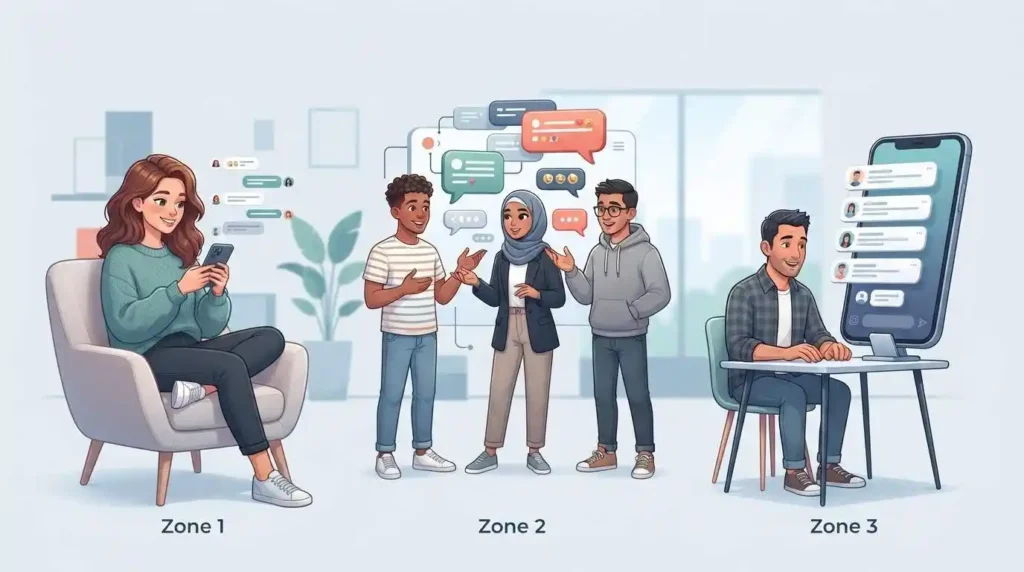
- Text messages: “Wtv, I’ll go with your choice.”
- DMs: “Wtv lol, it’s not a big deal.”
- Group chats: “Wtv, someone decide.”
- Social-media comments: “Wtv 😂”
- Casual conversations: “Wtv works for me.”
It is especially useful when someone wants to express indifference, flexibility, resignation, or a lack of concern without typing the entire word.
The abbreviation can also be used at the beginning or end of a message, depending on the writer’s style.
WTV in Different Contexts
The meaning of WTV generally remains “whatever,” but its intended tone can change with the context.
From a Friend
A friend might use WTV simply to say they are flexible:
“WTV, you choose where we eat.”
This can be completely neutral and does not necessarily show annoyance.
From Someone You’re Talking To
If someone sends “wtv” after a disagreement, it may suggest that they do not want to continue the discussion.
For example:
“Wtv, let’s just move on.”
The surrounding messages are more useful for understanding the person’s attitude than the abbreviation itself.
In a Group Chat
WTV can communicate that someone has no preference:
“Wtv, I’m good with either option.”
Here, the abbreviation is casual rather than rude.
In Social Media Comments
A short “wtv” comment may express indifference or dismissal. However, comments can be difficult to interpret without knowing what came before them.
In a Disagreement
WTV can sometimes sound irritated or dismissive:
“Wtv, believe what you want.”
In this situation, the phrase may indicate that the person wants to end the conversation.
Important: WTV by itself does not prove that someone is angry, rude, or upset. Look at the previous messages, punctuation, emojis, and overall conversation.
Real Chat Examples
Here are realistic ways WTV can appear in casual conversations:
- A: “Which pizza should we get?”
B: “Wtv, you pick.” - A: “Do you want the blue one or black one?”
B: “Wtv works.” - A: “Are we going now or later?”
B: “Wtv is fine with me.” - A: “You said you’d choose the movie.”
B: “Wtv, you choose this time.” - A: “I think the other option is better.”
B: “Wtv 😂” - A: “Are you still coming?”
B: “Wtv, I’ll see.” - A: “Let’s just watch something.”
B: “Wtv you want.” - A: “You keep changing the plan.”
B: “Wtv, let’s just go.” - A: “Do you care which game we play?”
B: “Wtv.” - A: “Should we meet at 5 or 6?”
B: “Wtv, either works.” - A: “I don’t think that’s a good idea.”
B: “Wtv, it’s your choice.” - A: “Which picture should I post?”
B: “Wtv one you like.” - A: “Want to order burgers or tacos?”
B: “Wtv, I’m hungry.” - A: “Why are you still talking about this?”
B: “Wtv, forget it.” - A: “Do you want to come with us?”
B: “Wtv, I can come.” - A: “You can choose the music.”
B: “Wtv, put on something good.” - A: “I changed the plan again.”
B: “Wtv lol.” - A: “Are you upset?”
B: “Wtv.” - A: “We can do it tomorrow instead.”
B: “Wtv works for me.” - A: “I guess we’ll just leave it there.”
B: “Wtv.”
These examples show why context matters. The same abbreviation can communicate flexibility in one message and frustration in another.
How to Reply to WTV
Your reply should depend on what the person appears to mean.
Casual Replies
- “Okay, you pick.”
- “Sounds good.”
- “Either works for me too.”
- “Cool, let’s do that.”
Friendly Replies
- “Haha, fair enough.”
- “Alright, no worries.”
- “You’re good 😂”
- “Okay, we’ll figure it out.”
Funny Replies
- “That was a very detailed answer 😂”
- “So… I’m choosing then?”
- “WTV is officially your decision-making strategy 😂”
- “Got it, captain ‘whatever.’”
Neutral Replies
- “Okay.”
- “Understood.”
- “No problem.”
- “We can leave it there.”
If WTV appears after a tense exchange, a calm response is usually better than assuming what the person meant.
What Tone Does WTV Have?
WTV is strongly context-dependent. Common tones include:

- Casual: “Wtv, either one is fine.”
- Indifferent: “Wtv, I don’t care.”
- Playful: “Wtv 😂”
- Dismissive: “Wtv, believe what you want.”
- Resigned: “Wtv, let’s just go.”
- Neutral: “Wtv works for me.”
Punctuation can also affect how a message feels. Compare:
- “wtv lol” — can feel light or playful.
- “WTV.” — may feel more blunt or dismissive.
- “wtv, you choose” — may simply mean the person has no preference.
These are tendencies, not fixed rules.
Is WTV Rude or Offensive?
WTV is not inherently rude or offensive. It is a casual abbreviation for “whatever.”
However, “whatever” itself can sound dismissive in certain situations. As a result, WTV may come across as rude when someone uses it to shut down a conversation or show that they do not care about another person’s point.
Casual Conversations
WTV is generally fine among friends and other people who commonly use texting shorthand.
School or Work
It is better to use the full word or a clearer phrase when communicating with teachers, supervisors, coworkers, or other people in situations where informal slang may seem too casual.
Formal Writing
Avoid WTV in essays, applications, official messages, and other formal writing. Write “whatever” instead.
Other Meanings of WTV
For ordinary texting and social-media conversations, “whatever” is the key meaning of WTV.
WTV can have different meanings in specialized settings because abbreviations are sometimes created for specific industries, organizations, or technical subjects. However, those meanings should not automatically be applied to a casual text.
If you see WTV in a technical document, workplace system, game, or specialized community, use the surrounding context to determine whether it has a field-specific meaning.
Common Mistakes About WTV
Assuming WTV Always Means Someone Is Mad
It does not. Someone may use WTV simply because they have no preference.
Thinking WTV Always Sounds Rude
The abbreviation can be perfectly casual. Tone depends heavily on the rest of the message.
Treating WTV Like a Formal Acronym
WTV is primarily a shortened texting form of “whatever.” It is not normally used like a formal initialism in everyday conversation.
Assuming the Sender’s Intent From WTV Alone
A single abbreviation is not enough to determine someone’s feelings. Consider the complete conversation, wording, punctuation, and emojis.
Using WTV in Formal Communication
Although understandable, WTV can look overly casual in professional or academic settings. Spelling out “whatever” is clearer.
WTV and Related Slang
| Term | Meaning | Common Use |
| WTV | Whatever | Showing indifference or flexibility |
| IDK | I don’t know | Uncertainty or lack of knowledge |
| IDC | I don’t care | Stronger expression of indifference |
| NVM | Never mind | Dropping or withdrawing a topic |
| TBH | To be honest | Introducing a candid opinion |
| IKR | I know, right? | Agreeing with someone’s statement |
The closest comparison is often IDC, but they are not identical. WTV can mean “whatever” without necessarily saying “I don’t care,” while IDC more directly expresses lack of concern.
People Also Ask About WTV Meaning in Text
What does WTV mean in texting?
WTV usually means “whatever.” It is informal texting shorthand used to express indifference, flexibility, resignation, or dismissal depending on context.
Is WTV the same as whatever?
Yes. In ordinary texting, WTV is a shortened form of “whatever.” The abbreviation is simply quicker to type.
Does WTV mean I don’t care?
Sometimes, but not always. WTV can communicate indifference, but IDC is a more direct abbreviation for “I don’t care.”
Does WTV mean someone is annoyed?
Not necessarily. WTV can sound annoyed when used in a disagreement, but it can also be neutral or playful in a casual conversation.
Is WTV appropriate for school or work?
It is usually better to avoid WTV in formal school or workplace communication. Using “whatever” or a more specific response will generally sound clearer and more appropriate.
What is the difference between WTV and IDC?
WTV means “whatever” and can show that someone is flexible, indifferent, or dismissive. IDC means “I don’t care” and more directly communicates a lack of concern.
Why do people use WTV instead of whatever?
People use WTV because it is shorter and fits the quick style of texting and online communication. It can also make a message feel more casual.
Conclusion
WTV usually means “whatever” in text messages, DMs, group chats, and social media. It is an informal texting abbreviation that can express indifference, flexibility, resignation, or dismissal.
Its tone depends on context. A message such as “wtv, you pick” may be neutral, while “WTV.” during an argument can sound dismissive. WTV is fine for casual communication but is better avoided in formal school, workplace, or professional writing.

Emma Brooks is a writer focused on captions and quotes that capture experiences, emotions, and memorable moments. Her four and a half years of work include travel, lifestyle, relationship, event, social media, entertainment, and aesthetic themes. Emma analyzes tone, organizes caption concepts by context, and refines wording to create clear expressions suited to different occasions and visual styles.