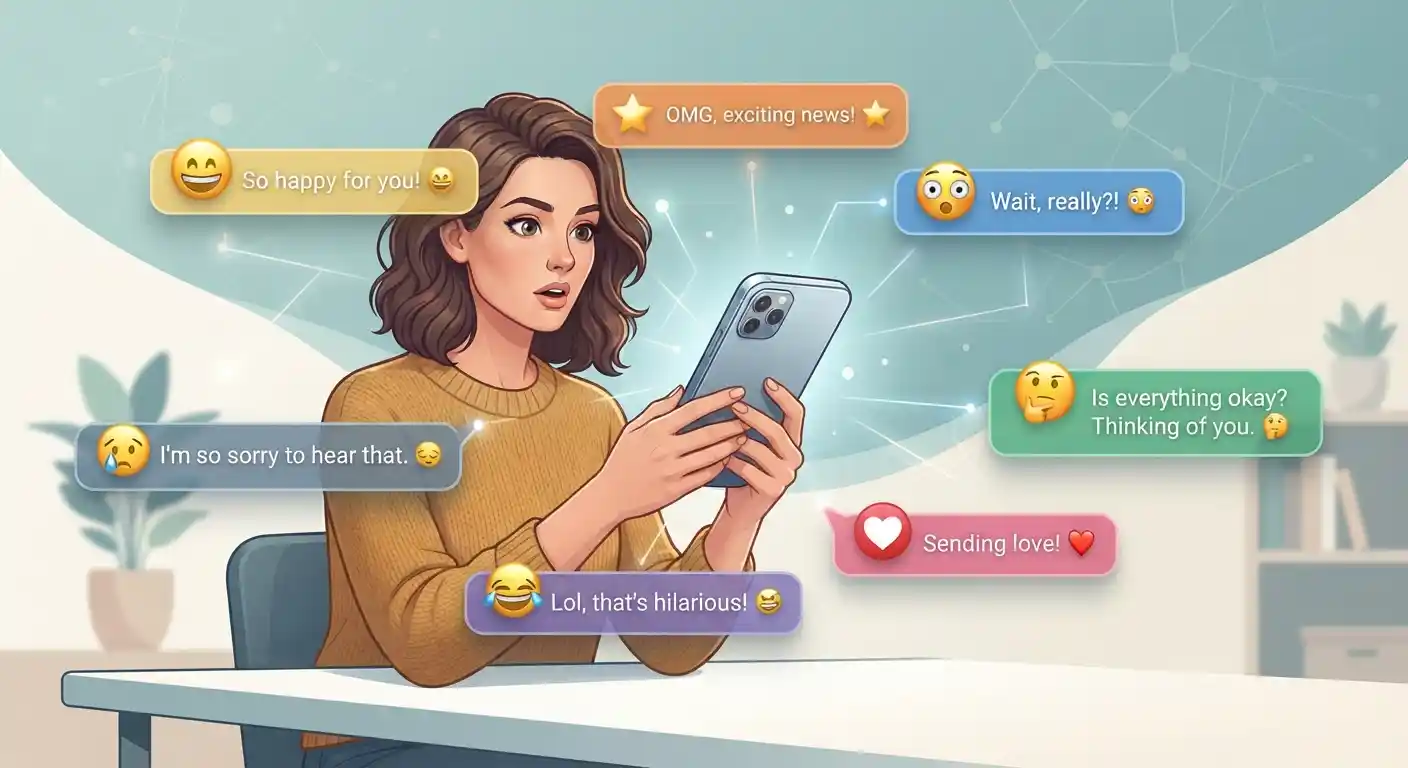
Emotional expressions are words, phrases, emojis, reactions, or other signals people use to show how they feel. In texts and online communication, they help express emotions such as happiness, sadness, excitement, surprise, frustration, affection, or concern.
Key Takeaways
- Emotional expressions communicate feelings through words, tone, emojis, and reactions.
- They are not a traditional acronym or texting abbreviation with one full form.
- In text messages, they can help make the sender’s tone easier to understand.
- The same expression can feel different depending on context, punctuation, emojis, and the relationship between people.
- Emotional expressions can be positive, negative, neutral, playful, or mixed.
- Online communication often uses emojis, GIFs, reactions, and expressive phrases to show emotion.
Emotional Expressions Meaning in Text
The term emotional expressions refers to ways people communicate their feelings. In text messages and online communication, emotions can be expressed directly or indirectly.
For example, someone might write:
- “I’m so happy for you!”
- “That made me really sad.”
- “OMG 😭”
- “I can’t believe this 😂”
- “I’m proud of you.”
These are all emotional expressions because they communicate how someone feels or reacts.
Unlike a texting abbreviation such as LOL or BRB, emotional expressions are a broad category rather than one specific piece of internet slang. They can include words, phrases, punctuation, emojis, reactions, and other forms of communication.
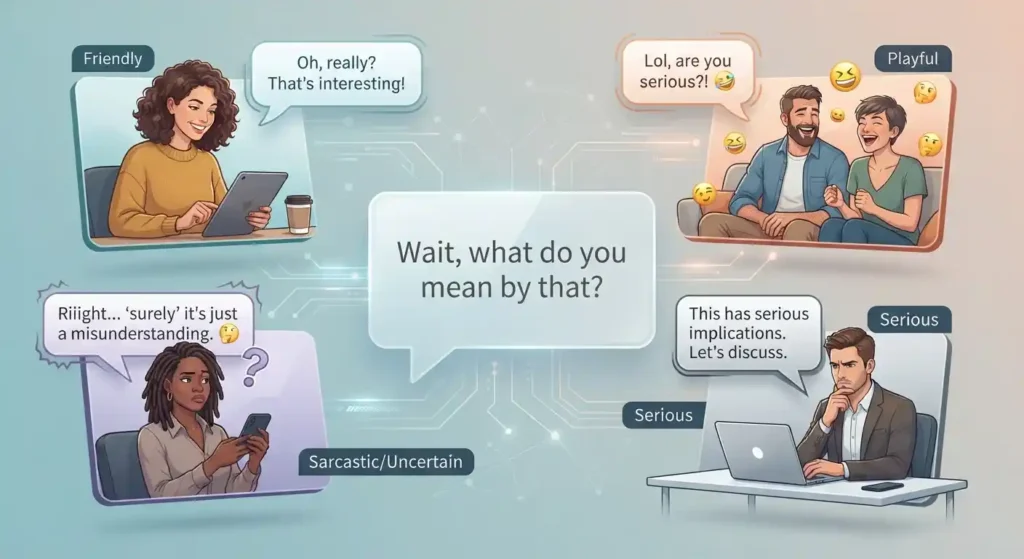
The meaning usually depends on the conversation. A simple message such as “I’m fine” may sound genuinely calm, upset, or sarcastic depending on the wording and context.
What Does Emotional Expressions Stand For?
Emotional expressions do not stand for a fixed phrase because the term is not an acronym.
It is a general communication term made up of two ordinary words:
- Emotional relates to feelings and emotions.
- Expressions are ways those feelings are shown or communicated.
Together, emotional expressions means the ways people show or communicate their emotions.
In texting and social media, this can happen through written language, emojis, GIFs, reactions, punctuation, and other digital communication tools.
How Are Emotional Expressions Used?
Emotional expressions are used in many types of communication, especially when people want others to understand how they feel.
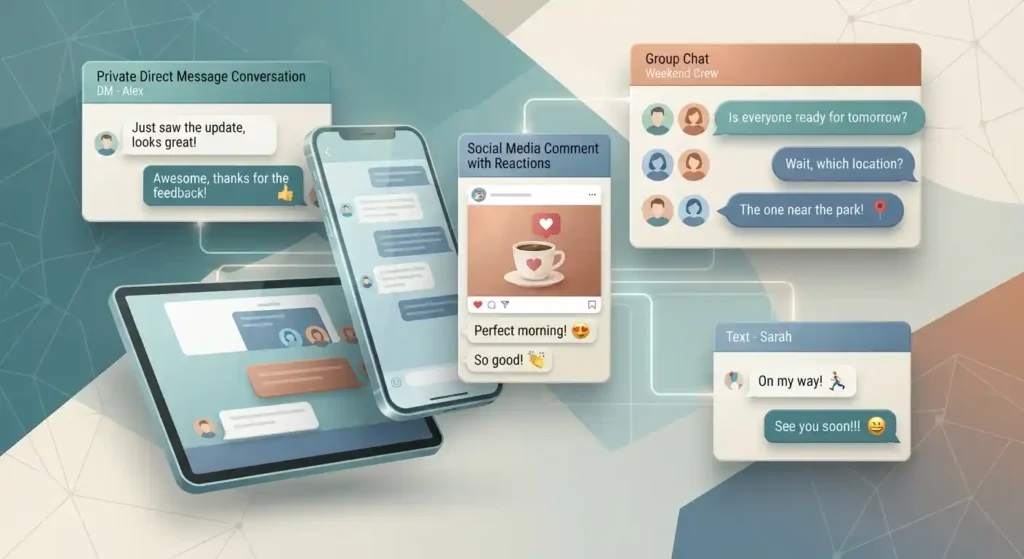
In Text Messages
People often use direct statements to express emotions.
Examples include:
- “I’m really excited!”
- “That honestly hurt my feelings.”
- “I’m so proud of you.”
- “I miss you.”
- “I’m nervous about tomorrow.”
Texting can make emotional tone harder to read because the other person cannot hear someone’s voice or see their facial expressions. As a result, people may use extra words, punctuation, or emojis to make their feelings clearer.
In DMs and Private Messages
Direct messages often include emotional expressions because conversations can be more personal.
Someone might write:
- “That made my day 🥹”
- “I’m worried about you.”
- “I’m so happy you told me.”
- “That was actually really sweet.”
The meaning still depends on the relationship and the surrounding conversation. An emotional message can show care or appreciation without automatically indicating romantic interest.
On Social Media
Social media users often express emotions through:
- Emojis
- GIFs
- Reaction images
- Short phrases
- Comments
- Likes and reactions
For example:
- “I’m crying 😂”
- “This is so wholesome 🥹”
- “NO WAY 😭”
- “I love this!”
- “My heart 🥺”
Some of these expressions are figurative. For example, “I’m crying 😂” often means someone finds something extremely funny rather than that they are literally crying.
In Group Chats
Emotional expressions can also show a reaction to news, jokes, plans, or events.
Examples include:
- “I’m so excited for this!”
- “Wait, what?! 😭”
- “I’m genuinely shocked.”
- “That is so sweet 🥹”
- “I’m stressed already 😂”
Group chats often move quickly, so short emotional reactions and emojis can communicate feelings faster than long explanations.
Emotional Expressions in Different Contexts
The meaning of an emotional expression can change depending on the situation.
From a Friend
A friend may use emotional expressions to show support, excitement, concern, appreciation, or frustration.
For example, “I’m so proud of you” is generally a clear expression of encouragement. However, the overall relationship and conversation still help explain the tone.
From Someone You Like
An emotional expression from a crush can feel more meaningful because of the existing relationship or interest. Still, the words alone do not prove romantic attraction.
For example, “I miss talking to you” may show that someone values the connection, but its exact meaning depends on the broader conversation.
In Dating or a Relationship
Emotional expressions are often used to communicate feelings, needs, appreciation, and concerns.
Examples include:
- “I really appreciate you.”
- “I missed you today.”
- “That made me feel better.”
- “I’m upset about what happened.”
Clear communication matters because short messages can sometimes be misunderstood.
In Social Media Comments
Online comments often use exaggerated emotional language for emphasis.
For example:
- “I’m obsessed 😭”
- “This made my whole day.”
- “I’m screaming 😂”
- “My heart can’t handle this 🥹”
These phrases are often expressive rather than literal.
Why Context Matters
When interpreting emotional expressions, consider:
- Previous messages
- The conversation topic
- Punctuation
- Emojis
- The relationship between the people
- Whether the language seems literal or exaggerated
A single phrase does not always explain exactly what someone feels.
Common Types of Emotional Expressions
Emotional expressions can communicate many different feelings.
Happiness and Excitement
Examples:
- “I’m so happy!”
- “This is amazing!”
- “I can’t wait!”
- “Yesss!”
- “I’m so excited 😭”
Surprise and Shock
Examples:
- “No way!”
- “OMG!”
- “What?! 😭”
- “I can’t believe it.”
Sadness and Disappointment
Examples:
- “I’m really sad about this.”
- “That hurts.”
- “I’m disappointed.”
- “I didn’t expect that.”
- “🥺”
Affection and Appreciation
Examples:
- “I appreciate you.”
- “You’re the best.”
- “That was so sweet.”
- “I love this.”
- “That means a lot to me.”
Frustration
Examples:
- “I’m so annoyed.”
- “Seriously?”
- “This is stressing me out.”
- “Why is this happening?”
- “I’m over it 😭”
These categories can overlap. For example, someone might use crying emojis to express sadness, laughter, excitement, or being emotionally overwhelmed, depending on context.
Real Chat Examples
Here are some natural examples of emotional expressions in messages:
- A: I got the job!
B: No way!! I’m so happy for you! 🎉 - A: I passed my test.
B: I’m proud of you! I knew you could do it. - A: Sorry I forgot.
B: Honestly, that kind of hurt my feelings. - A: Look at this video 😂
B: I’m crying 😭😂 - A: I have a surprise for you.
B: Wait, now I’m excited 😭 - A: I finally finished the project.
B: That’s such a relief! - A: Today was awful.
B: I’m sorry. Do you want to talk about it? - A: Guess who’s coming tomorrow?
B: OMG, I’m so excited! - A: I made this for you.
B: Stoppp, that’s so sweet 🥹 - A: The event got canceled.
B: Aw, I’m really disappointed. - A: I accidentally sent it to everyone.
B: Oh no 😭 I’d be so embarrassed. - A: My package finally arrived!
B: Yesss! I’m happy for you 😂 - A: I haven’t seen you in forever.
B: I know! I miss hanging out with you. - A: I have to present tomorrow.
B: I’d be nervous too, but you’ll do great. - A: They actually said yes.
B: WHAT?! I’m shocked 😭 - A: Thanks for helping me earlier.
B: Of course! I’m glad I could help. - A: This photo is adorable.
B: My heart 🥹 - A: I stayed up all night studying.
B: I’m exhausted just hearing that 😭 - A: We won!
B: LET’S GO!! I’m so hyped! - A: I didn’t get the position.
B: I’m sorry. I know you really wanted it.
These examples show that emotional expressions can range from direct statements to short reactions and emojis.
How to Reply to Emotional Expressions
Your reply should usually match the person’s emotion and the situation.
Casual Replies
- “Same honestly 😂”
- “I get you.”
- “I know what you mean.”
- “That’s wild!”
Friendly Replies
- “I’m happy for you!”
- “You deserve it!”
- “I’m here for you.”
- “That sounds really tough.”
Funny Replies
- “Not the emotional roller coaster 😭”
- “Okay, now I’m feeling all the emotions 😂”
- “Why did that hit me harder than expected? 😭”
Neutral Replies
- “I understand.”
- “That makes sense.”
- “Thanks for sharing that with me.”
- “I can see why you feel that way.”
Relationship or Personal Replies
- “I appreciate you telling me.”
- “I’m glad you shared how you feel.”
- “That means a lot to me.”
- “I’m here, and I’m listening.”
The best response depends on what the other person is expressing. Someone sharing excitement may appreciate enthusiasm, while someone sharing disappointment may prefer understanding and support.
What Tone Do Emotional Expressions Have?
Emotional expressions do not have one fixed tone. Their tone depends on the emotion and how it is communicated.
They can be:
- Happy
- Excited
- Friendly
- Caring
- Sad
- Frustrated
- Playful
- Surprised
- Sarcastic
- Dramatic
- Neutral
Emojis and punctuation can also affect tone.
For example:
- “I’m happy” feels direct and calm.
- “I’m happy!!!” feels more excited.
- “I’m happy 😭” may suggest strong excitement or emotional intensity.
- “I’m happy lol” may feel more casual or conversational.
Context is important because the same words can sometimes carry different tones.
Are Emotional Expressions Rude or Offensive?
Emotional expressions are not inherently rude or offensive. Most are simply ways of communicating feelings.
However, the specific words and tone matter. Respectful expressions of emotion are usually appropriate in casual conversations, while aggressive or insulting language may not be.
Casual Conversations
Emotional expressions are common and natural in texts, group chats, and conversations with friends.
Social Media
Emotional reactions are also common in comments and posts, often using emojis, GIFs, or exaggerated phrases.
School and Work
Emotional communication can still be appropriate, but more professional wording may be better in formal situations.
For example:
- Casual: “I’m so stressed 😭”
- More professional: “I’m concerned about the deadline.”
Formal Writing
Highly emotional internet-style language, excessive emojis, and dramatic reactions may not fit formal writing. The best choice depends on the audience and situation.
Other Meanings of Emotional Expressions
The phrase emotional expressions is also used outside texting and social media.
In Psychology and Communication
Emotional expression can refer to how people communicate feelings through:
- Facial expressions
- Body language
- Voice
- Words
- Behavior
This broader meaning includes both verbal and nonverbal communication.
In Art and Creative Work
Emotional expression can describe how artists, musicians, writers, performers, or other creators communicate feelings through their work.
In this context, the phrase is not internet slang. It refers more broadly to expressing emotion through creative or human communication.
Common Mistakes About Emotional Expressions
Here are a few common misunderstandings:
- Assuming every emotional phrase is literal. Online language can be exaggerated for humor or emphasis.
- Ignoring emojis and punctuation. These can change how a message feels.
- Assuming romantic intent. Caring or affectionate language does not automatically mean romantic attraction.
- Judging a message without context. Previous conversations and relationships can affect interpretation.
- Treating all emotional expressions the same. A crying emoji, an excited phrase, and a supportive message can communicate very different emotions.
Emotional Expressions and Related Slang
Several common online expressions help people communicate emotions quickly.
| Term | Meaning | Common Use |
|---|---|---|
| LOL | Laughing out loud | Showing laughter or amusement |
| OMG | Oh my God / Oh my gosh | Expressing surprise or excitement |
| SMH | Shaking my head | Showing disappointment or disbelief |
| IKR | I know, right? | Showing agreement or shared reaction |
| Aww | A reaction to something sweet or touching | Showing affection or warmth |
| 😭 | Loudly crying face emoji | Sadness, laughter, strong emotion, or exaggeration |
| 😂 | Face with tears of joy emoji | Showing strong amusement |
These terms and emojis can express emotion quickly, but their meaning may change depending on the conversation.
People Also Ask About Emotional Expressions
What are the main types of emotional expressions?
Emotional expressions can communicate feelings such as happiness, sadness, excitement, surprise, frustration, fear, affection, and concern. People may express these feelings through words, facial expressions, body language, tone, or digital reactions.
What are examples of emotional expressions?
Examples include phrases such as “I’m so happy,” “That hurt my feelings,” and “I’m proud of you.” Emojis, GIFs, reactions, and expressions such as “OMG” or “😭” can also communicate emotion online.
Why are emotional expressions important in texting?
Text messages do not include facial expressions or vocal tone, so emotional expressions can help make a message clearer. Words, punctuation, and emojis may help show whether someone is joking, excited, upset, or supportive.
Can emojis be emotional expressions?
Yes. Emojis can communicate or strengthen an emotional reaction in digital communication. However, the meaning of an emoji can depend on context and how a particular person uses it.
Are emotional expressions always direct?
No. Some people directly state how they feel, while others use humor, emojis, exaggeration, or indirect wording. Understanding the surrounding conversation can help clarify the intended emotion.
Do emotional expressions mean someone is romantically interested?
Not necessarily. Emotional or affectionate language can appear between friends, family members, partners, and other people. A single expression alone does not prove romantic interest.
How can you understand someone’s emotional expression in a text?
Look at the full conversation rather than one word or emoji. Consider the topic, wording, punctuation, previous messages, relationship, and whether the language appears literal, playful, or exaggerated.
Conclusion
Emotional expressions are ways people communicate feelings through words, phrases, emojis, reactions, and other forms of communication. They are not a single texting acronym with a fixed full form.
In texts and social media, emotional expressions can help show happiness, sadness, excitement, surprise, concern, frustration, and many other feelings. Their exact tone and meaning depend on context, wording, punctuation, emojis, and the relationship between the people communicating.

Mila Parker is a writer focused on captions and quotes that capture experiences, emotions, and memorable moments. Her three years of work include creating material around travel, lifestyle, relationships, events, social media, entertainment, and aesthetic themes. Mila examines tone, refines phrasing, and structures captions to suit different contexts, occasions, and visual styles.