Emotional slang refers to informal words, abbreviations, phrases, and expressions people use online or in text messages to communicate feelings, reactions, or moods. It is not one specific acronym or phrase; its meaning depends on the slang expression and conversation context.
Key Takeaways
- Emotional slang is a broad category of informal language used to express feelings and reactions.
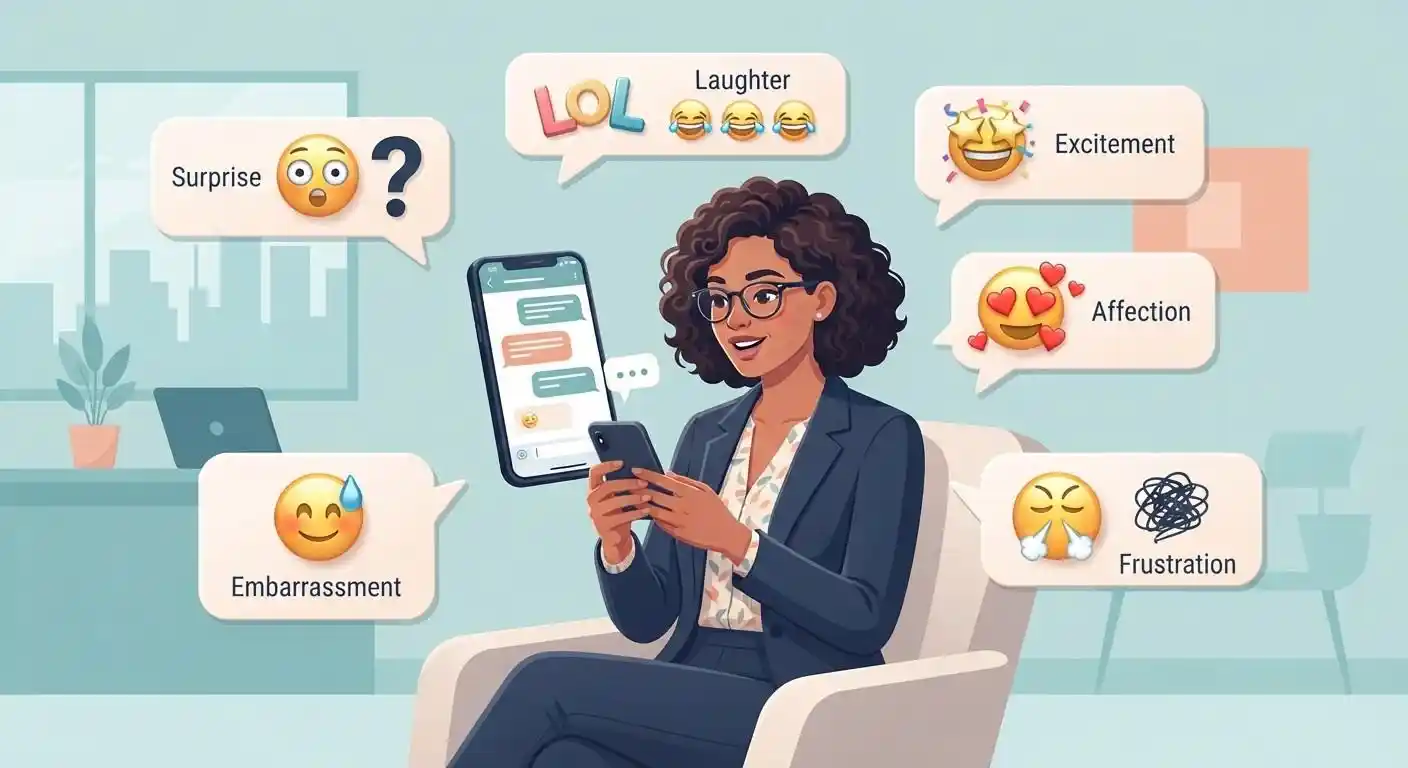
- It can communicate emotions such as happiness, sadness, excitement, frustration, surprise, affection, or embarrassment.
- Emotional slang appears in text messages, DMs, group chats, comments, and social media posts.
- It can include abbreviations, short phrases, expressive spellings, emojis, and internet slang.
- The same expression can have different meanings depending on context, punctuation, emojis, and the relationship between the people chatting.
- Emotional slang is generally casual and is usually better suited to personal conversations than formal or professional writing.
Emotional Slang Meaning in Text
In texting, emotional slang means informal language used to show or emphasize an emotion or reaction. Unlike a single texting abbreviation, emotional slang describes a whole group of expressions rather than one fixed term.
For example, someone might write “OMG” to show surprise, “LOL” to show amusement, or “I’m dead” as an exaggerated reaction to something extremely funny. Other expressions can communicate excitement, frustration, embarrassment, affection, or disappointment.
The exact meaning comes from the conversation. An expression that sounds dramatic on its own may simply be playful between friends.
Is Emotional Slang an Acronym?
No. “Emotional slang” is not normally an acronym or texting abbreviation with a fixed full form. It is a descriptive term for informal expressions that communicate emotions or reactions.
Individual examples within this category can be acronyms or abbreviations, such as LOL, OMG, or WTF, but the phrase emotional slang itself does not stand for a longer expression.
What Does Emotional Slang Stand For?
Emotional slang does not have a standard full form. The word emotional describes language connected with feelings, while slang refers to informal language used in particular social groups or settings.
So, when someone searches for the meaning of emotional slang, they may actually be looking for examples of slang used to express a particular emotion.
How Is Emotional Slang Used?
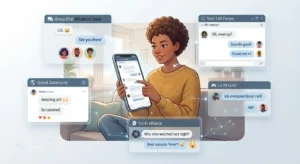
Emotional slang is mainly used to make digital conversations feel more expressive, casual, and conversational.
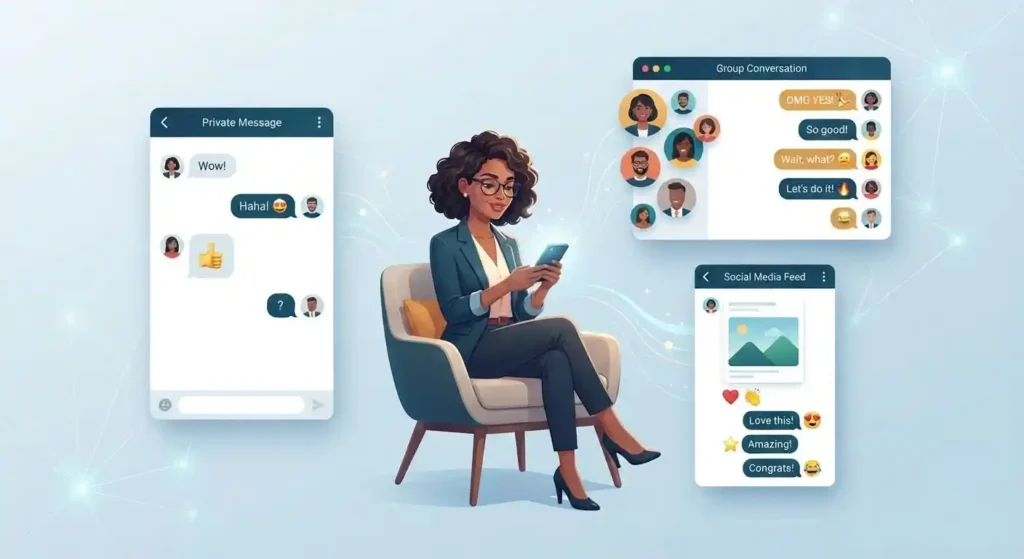
Text Messages
People use emotional slang to react quickly without writing a long explanation.
Example:
“OMG, you actually got tickets 😭”
DMs
In private messages, emotional slang can help communicate excitement, surprise, embarrassment, or humor.
Example:
“Stoppp 😭 that was so funny.”
Group Chats
Friends may use short emotional expressions as quick reactions to something someone posts.
Example:
“NO WAY 💀”
Social Media Comments
Emotional slang is also common in comments when people react to photos, videos, jokes, or personal updates.
Example:
“This is so cute 😭”
The expression does not necessarily indicate literal sadness. The emoji and surrounding conversation can change how it is understood.
Emotional Slang in Different Contexts
Context is especially important because emotional slang often uses exaggeration, humor, or expressions that are not meant literally.
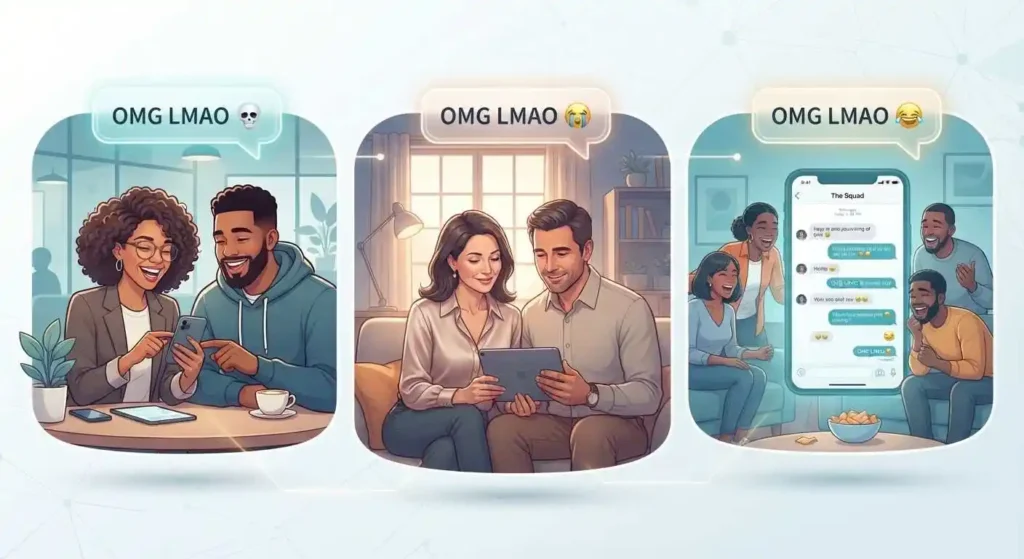
From a Friend
A friend might use emotional slang to show excitement, amusement, frustration, or surprise.
Example:
“Bro, I can’t 😭”
This can simply mean that something is extremely funny or overwhelming.
From a Guy or Girl
The sender’s gender does not automatically change the meaning of emotional slang. The same expression can have the same basic meaning regardless of who sends it.
The surrounding conversation matters more than the sender’s gender.
From a Crush
Emotional slang can sometimes appear in a flirty conversation, but slang alone does not prove romantic interest.
For example, “stoppp 😂” could be playful, embarrassed, amused, or flirtatious depending on what came before it.
In Dating
People may use emotional slang to make messages feel relaxed or expressive.
Example:
“You remembered 😭 that’s actually so sweet.”
The emotional meaning comes from the complete message rather than the slang alone.
In a Relationship
Partners may use exaggerated expressions, playful abbreviations, or emojis to show affection and reactions.
Example:
“Miss youuu 🥲”
The extra letters and emoji add emotional emphasis, but their interpretation still depends on the relationship and conversation.
In a Group Chat
A group chat often produces very short emotional reactions.
Example:
“HELP 💀”
This usually functions as an exaggerated reaction rather than a literal request for help.
In Social Media Comments
Comment slang can be especially expressive because people often react to photos, videos, memes, and stories with only a few words.
Example:
“Obsessed 😭”
Depending on the post, this can mean strong enthusiasm or admiration rather than literal obsession.
Real Chat Examples
Here are realistic examples showing how emotional slang can work in everyday online conversations:
- A: “I passed my driving test!”
B: “OMG congrats!! 😭” - A: “Did you see that video?”
B: “I’m crying 😂” - A: “They canceled the concert.”
B: “Nooo 😭” - A: “I finally finished the project.”
B: “LET’S GOOO 🔥” - A: “Look what I found from middle school.”
B: “STOPPP 💀” - A: “She actually remembered my birthday.”
B: “Awwww 🥹” - A: “I forgot my homework at home.”
B: “Brooo 😭” - A: “This meme is too accurate.”
B: “I’m dead 💀” - A: “We got front-row seats!”
B: “NO WAYYY 😭” - A: “That was the funniest thing ever.”
B: “LOL I can’t 😂” - A: “He surprised me with my favorite snack.”
B: “That’s actually so sweet 🥹” - A: “I just watched the ending.”
B: “I’m not okay 😭” - A: “Guess who I ran into today?”
B: “WAIT WHAT 👀” - A: “I accidentally sent the message to the wrong person.”
B: “HELP 😭” - A: “We won the game!”
B: “LETS GOOOOO 🔥” - A: “I have to wake up at 5 tomorrow.”
B: “That’s rough 💀” - A: “Your cat is adorable.”
B: “I knowww 🥹” - A: “I finally got the job!”
B: “AHHH congrats!!” - A: “I forgot what I was going to say.”
B: “LOL same.” - A: “I miss everyone.”
B: “Aww, same 😭”
How to Reply to Emotional Slang
Because emotional slang is a broad category, the best response depends on the actual expression and the conversation.
Casual Replies
- “Haha, seriously!”
- “Right? 😂”
- “I know!”
- “Same honestly.”
- “For real.”
Friendly Replies
- “Aww, I get you.”
- “That’s so funny 😂”
- “I’m happy for you!”
- “You’re too much 😂”
- “I feel the same way.”
Funny Replies
- “You are so dramatic 😂”
- “I knew you’d say that.”
- “I’m crying too 💀”
- “Okay, calm down 😂”
- “This conversation is getting wild.”
Neutral Replies
- “I see what you mean.”
- “Yeah, that makes sense.”
- “Oh wow.”
- “Got it.”
- “That sounds intense.”
Flirty/Relationship Replies
When the surrounding conversation is already clearly romantic, a warm response can match the tone:
- “Aww, that’s sweet.”
- “You’re making me smile.”
- “I was thinking about you too.”
- “That actually made my day.”
- “You’re pretty cute when you say things like that.”
The slang itself should not be treated as proof that someone is flirting. Context and the broader conversation matter.
What Tone Does Emotional Slang Have?
Emotional slang is generally casual and informal, but its specific tone varies greatly.
It can be:
- Playful: “Stoppp 😂”
- Excited: “LET’S GOOO!”
- Amused: “I’m dead 💀”
- Surprised: “OMG!”
- Affectionate: “Awww 🥹”
- Frustrated: “Ugh, seriously?”
- Sad or sympathetic: “Aww no 😭”
- Dramatic: “I can’t anymore 😭”
- Sarcastic: depending on the surrounding message
- Neutral: when a short reaction is used without strong emotional emphasis
Punctuation, capitalization, repeated letters, and emojis can all change the emotional feel of a message.
Is Emotional Slang Rude or Offensive?
Emotional slang is not automatically rude or offensive. Most expressions are simply informal, but individual slang terms can contain profanity or language that may be inappropriate in certain settings.
For casual conversations with friends, slang is often acceptable. Social media and personal messaging also commonly use informal language.
For school, work, professional communication, applications, or formal writing, standard language is usually a safer choice unless the setting specifically calls for casual wording.
The important distinction is between emotional slang as a category and a particular slang expression. Some expressions are harmless, while others may be vulgar, insulting, or sensitive.
Common Emotional Slang Examples
Here are some familiar examples and the emotions they can communicate:
| Expression | Typical Emotional Meaning | Common Use |
|---|---|---|
| LOL | Amusement | Texts, chats, comments |
| OMG | Surprise or excitement | Texts and social media |
| LMAO | Strong amusement | Casual messaging |
| 😭 | Strong emotion, laughter, sadness, or exaggeration | Texts and comments |
| 💀 | Extreme amusement or disbelief | Casual online chats |
| Awww | Affection or sympathy | Personal messages |
| OMG NO | Shock or disbelief | Group chats and texts |
| I can’t | Overwhelmed amusement, disbelief, or frustration | Casual chats |
| I’m dead | Strong amusement or disbelief | Internet slang |
| Nooo | Disappointment, concern, or playful protest | Text messages |
| Let’s gooo | Excitement or celebration | Chats and gaming |
These expressions can shift meaning depending on context, so they should not be interpreted as fixed emotional codes.
Common Mistakes About Emotional Slang
Assuming It Has One Fixed Meaning
Emotional slang is a broad category, not one specific expression. Different slang terms communicate different emotions.
Taking Expressions Literally
Internet slang frequently uses exaggeration. “I’m dead,” for example, can be a humorous reaction rather than a literal statement.
Assuming an Emoji Has Only One Meaning
An emoji can represent different emotions depending on the message. 😭 may express sadness, laughter, embarrassment, affection, or overwhelming emotion.
Assuming Slang Proves Romantic Interest
A playful phrase or emotional emoji does not automatically mean someone has romantic feelings.
Using Casual Slang in Formal Communication
An expression that works perfectly in a group chat may sound out of place in a professional email or formal assignment.
Emotional Slang and Related Slang
Because emotional slang is a broad category, several types of internet slang overlap with it.
| Term | Meaning | Common Use |
|---|---|---|
| Reaction slang | Informal expressions showing a response or feeling | Texts, comments, group chats |
| Internet slang | Informal language developed or popularized through online communication | Social media and chats |
| Texting slang | Shortened or informal language used in messaging | Text messages and DMs |
| Acronyms | Short forms created from initial letters | Texts and online chats |
| Emojis | Visual symbols used to add emotion or meaning | Nearly all digital communication |
These categories can overlap. For example, OMG can function as both texting slang and an emotional reaction.
People Also Ask About Emotional Slang
What is emotional slang in texting?
Emotional slang in texting is informal language used to communicate feelings, reactions, or moods. It can include abbreviations, short phrases, exaggerated expressions, and emojis.
Is emotional slang an acronym?
No. Emotional slang is a general descriptive phrase, not a standard acronym with a fixed expansion. Individual examples of emotional slang may themselves be acronyms.
What are examples of emotional slang?
Examples include OMG, LOL, I’m dead, I can’t, nooo, and let’s gooo. Emojis such as 😭 and 💀 can also carry emotional meaning in online conversations.
Can emotional slang be romantic?
It can appear in romantic or flirtatious conversations, but emotional slang does not automatically have a romantic meaning. The relationship, previous messages, wording, and overall context are more important.
Why do people use emotional slang?
People use it because short informal expressions can make digital communication feel more expressive, playful, and natural. They can quickly show a reaction without a long explanation.
Is emotional slang appropriate for school or work?
Some mild slang may be fine in casual communication, but formal school and professional writing generally calls for standard language. The appropriate choice depends on the setting and audience.
Does an emoji count as emotional slang?
Not exactly. Emojis are visual symbols rather than slang words, but they often work alongside internet slang to communicate or emphasize emotions in digital conversations.
Conclusion
Emotional slang is a broad term for informal language used to express feelings, reactions, and moods in texts, DMs, group chats, and social media. It does not have a fixed full form because it is a category rather than a specific acronym.
Its tone can range from playful and excited to sympathetic, frustrated, affectionate, or humorous. Because many expressions are exaggerated or context-dependent, the safest way to understand them is to consider the entire conversation rather than interpreting one word, abbreviation, or emoji by itself.

Mila Parker is a writer focused on captions and quotes that capture experiences, emotions, and memorable moments. Her three years of work include creating material around travel, lifestyle, relationships, events, social media, entertainment, and aesthetic themes. Mila examines tone, refines phrasing, and structures captions to suit different contexts, occasions, and visual styles.