OP usually means “Original Poster” in text, social media, and online discussions. It refers to the person who created the original post or started a conversation. In gaming, however, OP often means “overpowered.”
Key Takeaways
- OP usually means “Original Poster” in online discussions.
- It refers to the person who created the original post or thread.
- In gaming, OP commonly means “overpowered.”
- The correct meaning depends heavily on the conversation topic.
- OP is informal online shorthand and is usually not rude or offensive.
- It does not automatically have a romantic or emotional meaning.
OP Meaning in Text
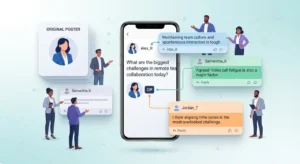
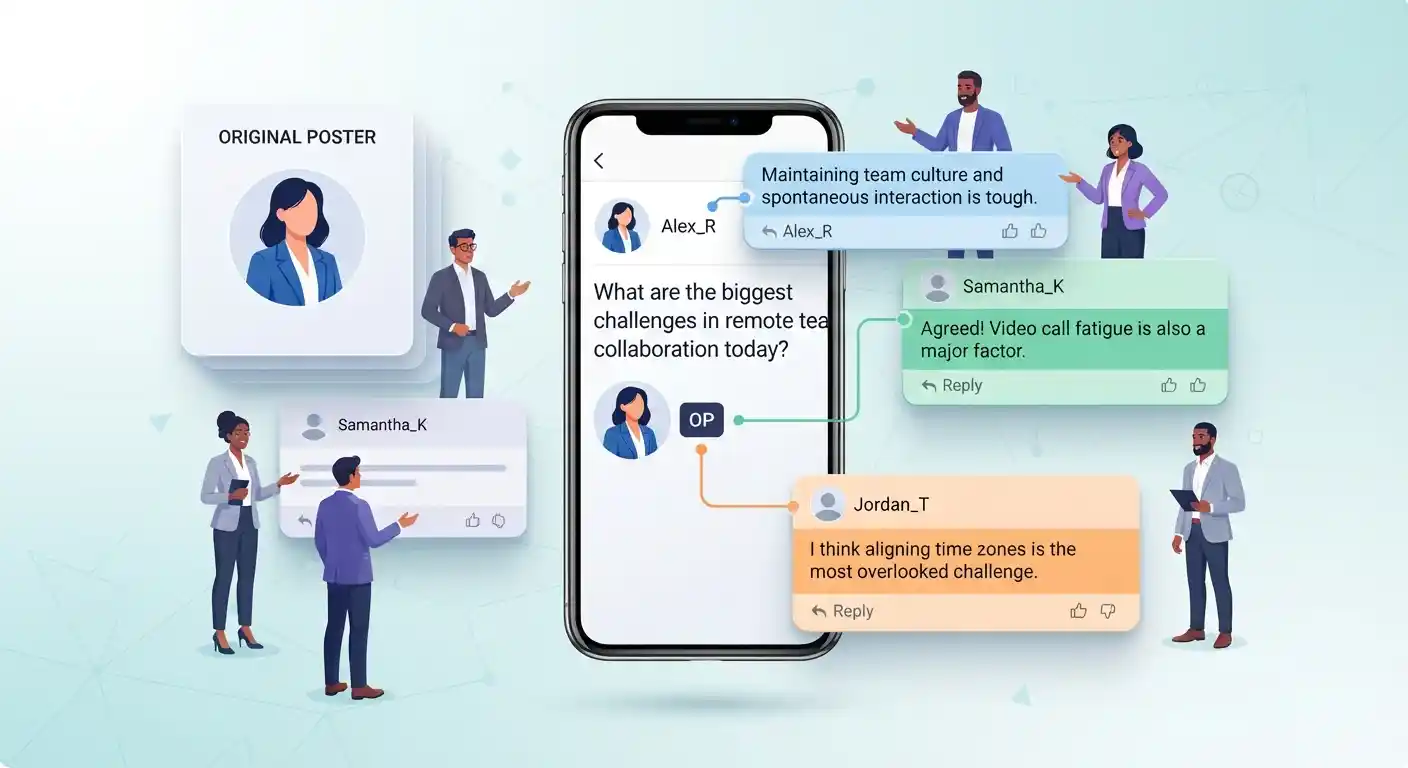
The most common meaning of OP in text and online conversations is “Original Poster.” An original poster is the person who created the post, question, discussion, or thread that other people are responding to.
For example, someone might write:
“OP explained it in the comments.”
Here, OP means the person who originally made the post.
OP is a common piece of internet slang and online communication shorthand. You will often see it in social media comments, forums, discussion threads, and community conversations where many people are talking about the same original post.
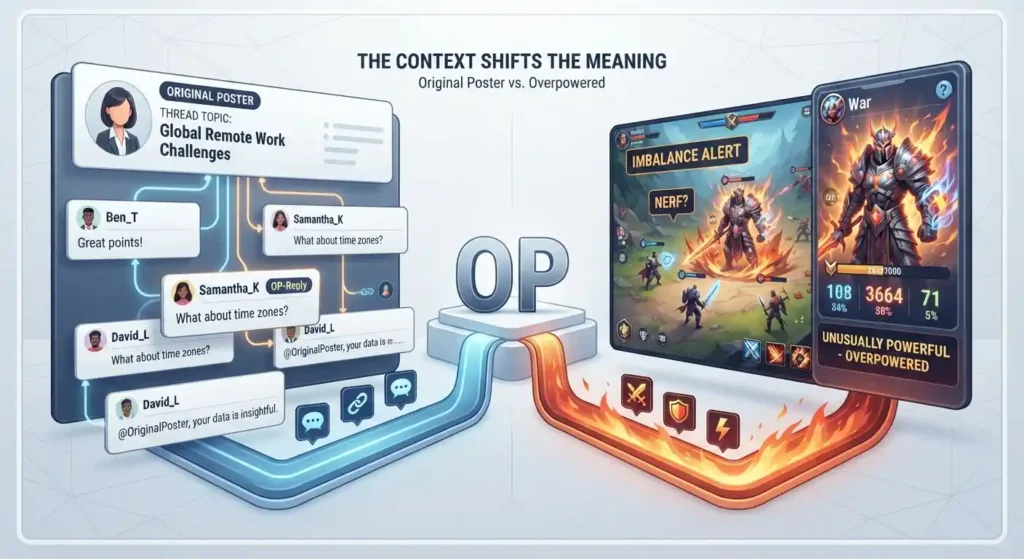
The meaning can change based on context. In gaming conversations, for example, OP usually means “overpowered,” describing something that is unusually strong or difficult to beat.
What Does OP Stand For?
In most online discussions, OP stands for “Original Poster.”
It describes the person who started the discussion by creating the original post.
For example:
“I agree with OP.”
This means:
“I agree with the person who made the original post.”
However, OP does not always have one fixed meaning. In gaming and some online conversations, OP can stand for “overpowered.”
For that reason, the surrounding conversation is important.
How Is OP Used?
In Social Media and Online Discussions
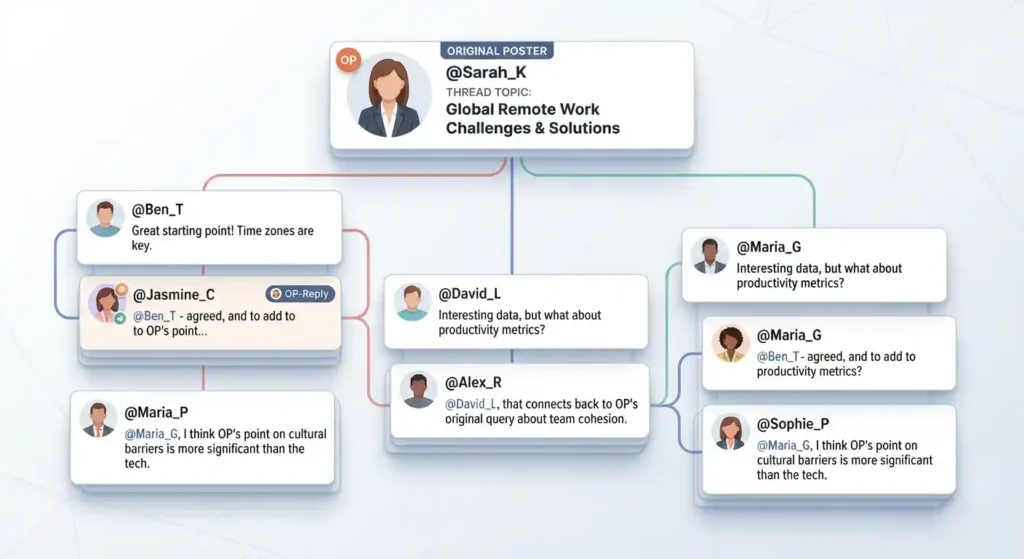
OP is commonly used when people are discussing someone’s original post.
Examples include:
- “OP has a good point.”
- “I think OP answered this already.”
- “Can someone explain what OP means?”
- “OP updated the post.”
This use helps people refer to the person who started a discussion without repeating their username.
In Comments and Forums
In a long comment section or discussion thread, OP can make conversations easier to follow.
For example:
“OP said they already tried that.”
The speaker is referring back to information shared by the original poster.
In Group Chats
OP may occasionally appear when a group chat is discussing a post shared by one of its members.
For example:
“Ask OP what happened.”
The meaning may be clear if everyone is talking about a particular post or message thread.
In Gaming
In gaming, OP usually means “overpowered.”
Players use it to describe a character, weapon, ability, strategy, or item that seems unusually strong compared with others.
For example:
“That weapon is so OP.”
This means the weapon is considered extremely powerful or unbalanced.
OP in Different Contexts
The meaning of OP depends mainly on the topic of the conversation.
From a Friend
If a friend says something like:
“OP was right.”
They are probably referring to the person who made the original post.
But if you are talking about a game and they say:
“That character is OP.”
They probably mean the character is overpowered.
From a Guy or Girl
OP has the same basic meaning regardless of who uses it. A guy or girl saying OP does not change the definition on its own.
Look at the topic and surrounding messages to understand what they mean.
In a Group Chat
In a group conversation, OP may refer to the person who started the post or discussion everyone is talking about.
For example:
“OP should explain what happened next.”
If the conversation is about gaming, OP could instead mean overpowered.
In Social Media Comments
This is one of the most common places to see OP used for Original Poster.
Someone may write:
“OP, can you give us an update?”
Here, the commenter is directly speaking to the person who created the original post.
In Gaming Conversations
Gaming gives OP a different meaning.
For example:
“They need to nerf that ability. It’s OP.”
Here, OP means overpowered, not Original Poster.
Words around OP, the topic, and the platform can all help you understand the intended meaning.
Real Chat Examples
Here are realistic examples of how OP can be used in different conversations:
- “OP actually explained the whole situation really well.”
- “I agree with OP on this one.”
- “Did OP ever post an update?”
- “Someone should ask OP for more details.”
- “OP said that happened last week.”
- “I think people are misunderstanding what OP meant.”
- “OP deleted the original post.”
- “Can OP answer this question?”
- “Honestly, OP has a valid point.”
- “I feel bad for OP after reading all the comments.”
- “Wait, wasn’t OP the person who started this thread?”
- “OP already mentioned that in another comment.”
- “That weapon is completely OP.”
- “Why is this character so OP?”
- “They need to balance it because it’s way too OP.”
- “That move is OP if you know how to use it.”
- “This build feels OP right now.”
- “I thought the boss was impossible, but that item is OP.”
- “OP, please give us part two.”
- “Everyone is arguing, but OP hasn’t even replied yet.”
How to Reply to OP
How you reply depends on whether OP means Original Poster or overpowered.
Casual Replies
If someone refers to the original poster, you could say:
- “Yeah, I agree with OP.”
- “OP explained it pretty clearly.”
- “I was wondering the same thing.”
- “Maybe OP can answer that.”
If someone says something is overpowered, you could reply:
- “Seriously, it’s way too strong.”
- “Yeah, that needs to be balanced.”
- “I know. It’s ridiculously powerful.”
Friendly Replies
- “OP made a good point, honestly.”
- “I hope OP gives us an update.”
- “I get what OP is saying.”
- “Yeah, that character is definitely OP.”
Funny Replies
- “OP disappeared and left us with questions.”
- “That weapon isn’t strong. It’s basically cheating.”
- “OP started the drama and walked away.”
- “That character is OP for absolutely no reason.”
Neutral Replies
- “OP may be referring to the original poster.”
- “In this context, OP means overpowered.”
- “It depends on what the conversation is about.”
- “The surrounding discussion should clarify the meaning.”
What Tone Does OP Have?
OP is usually casual, neutral, and context-dependent.
When it means Original Poster, it is mainly a practical abbreviation used to identify the person who created a post. It does not carry a positive or negative tone by itself.
When OP means overpowered, the tone can be:
- Casual
- Playful
- Critical
- Frustrated
- Impressed
For example, a gamer saying something is OP may be complaining that it is unfair or simply joking about how strong it is.
The abbreviation itself does not automatically show a specific emotion. The wording around it provides more clues.
Is OP Rude or Offensive?
No. OP is not generally considered rude or offensive.
It is commonly acceptable in:
- Casual conversations
- Social media
- Online communities
- Gaming chats
- Forums
- Comment sections
However, because OP is informal shorthand, it may not be appropriate for professional or formal writing unless the audience already understands the term.
For example, in a formal email or school assignment, writing “the original poster” or naming the person may be clearer.
Other Meanings of OP
OP in Gaming
In gaming, OP means “overpowered.”
It describes something considered unusually strong compared with other characters, weapons, abilities, or game mechanics.
Example:
“That character is OP after the latest update.”
This does not mean the character created an original post. The gaming context makes the meaning clear.
OP as Original Post
Sometimes OP can also refer to the original post itself, depending on how it is used.
For example:
“Go back and read the OP.”
In this sentence, OP refers to the original post rather than specifically the original poster.
The surrounding sentence usually makes this distinction clear.
OP in Entertainment and Anime Discussions
In discussions about anime and some other entertainment content, OP can refer to an opening or opening theme.
For example:
“The OP for this show is really good.”
This meaning is strongly tied to entertainment and anime-related conversations, so it is less likely to be the intended meaning in ordinary texting.
Common Mistakes About OP
Assuming OP Always Means Original Poster
Although Original Poster is a major meaning, OP can also mean overpowered, especially in gaming.
Always check the topic before deciding what OP means.
Confusing OP With a Specific Person’s Name
OP is usually a label for the person who created a post, not their actual name or username.
Ignoring the Conversation Topic
Context matters. In a gaming discussion, OP is much more likely to mean overpowered than Original Poster.
Assuming OP Has Romantic Meaning
OP does not naturally indicate flirting, attraction, love, or relationship status. If someone uses OP in a dating or relationship conversation, the meaning still depends on the surrounding discussion.
OP and Related Slang
| Term | Meaning | Common Use |
|---|---|---|
| OP | Original Poster / Overpowered | Online discussions or gaming |
| OC | Original Content | Social media and creative posts |
| NPC | Non-player character | Gaming and online slang |
| GOAT | Greatest of All Time | Praise for someone or something |
| GG | Good game | Gaming and online conversations |
| Nerf | Make something weaker in a game | Gaming discussions |
People Also Ask About OP Meaning in Text
What does OP mean in a text message?
OP usually means Original Poster when people are discussing a post, thread, or online conversation. In some contexts, especially gaming, it can mean overpowered.
What does OP mean on social media?
On social media, OP usually refers to the Original Poster, meaning the person who created the post being discussed. People may also use OP to refer to the original post itself when the sentence makes that meaning clear.
What does OP mean in gaming?
In gaming, OP usually means overpowered. It describes a character, weapon, ability, or strategy that seems unusually strong.
Does OP mean original post or original poster?
It can mean either one, depending on the sentence. Original Poster refers to the person who made the post, while original post refers to the post itself.
Is OP a slang term?
OP is a common form of internet shorthand rather than traditional spoken slang. It is widely used in online discussions, comments, forums, and gaming communities.
What does it mean when someone says something is OP?
When someone says something is OP, they usually mean it is overpowered. The person may be saying that it is unusually strong, effective, or difficult to compete against.
Is OP appropriate to use at work?
OP may be understood in workplaces that regularly use online forums or technical communities, but it can be unclear in formal communication. Writing the full phrase is often better when clarity matters.
Conclusion
OP most commonly means “Original Poster” in online discussions, social media comments, and text-based conversations about a post or thread. In gaming, OP usually means “overpowered.”
The term is informal, neutral, and highly dependent on context. It is not generally rude or offensive, but the meaning can change based on the conversation topic. When in doubt, look at the surrounding messages to determine whether OP refers to a person, an original post, or something considered unusually powerful.

Mila Parker is a writer focused on captions and quotes that capture experiences, emotions, and memorable moments. Her three years of work include creating material around travel, lifestyle, relationships, events, social media, entertainment, and aesthetic themes. Mila examines tone, refines phrasing, and structures captions to suit different contexts, occasions, and visual styles.