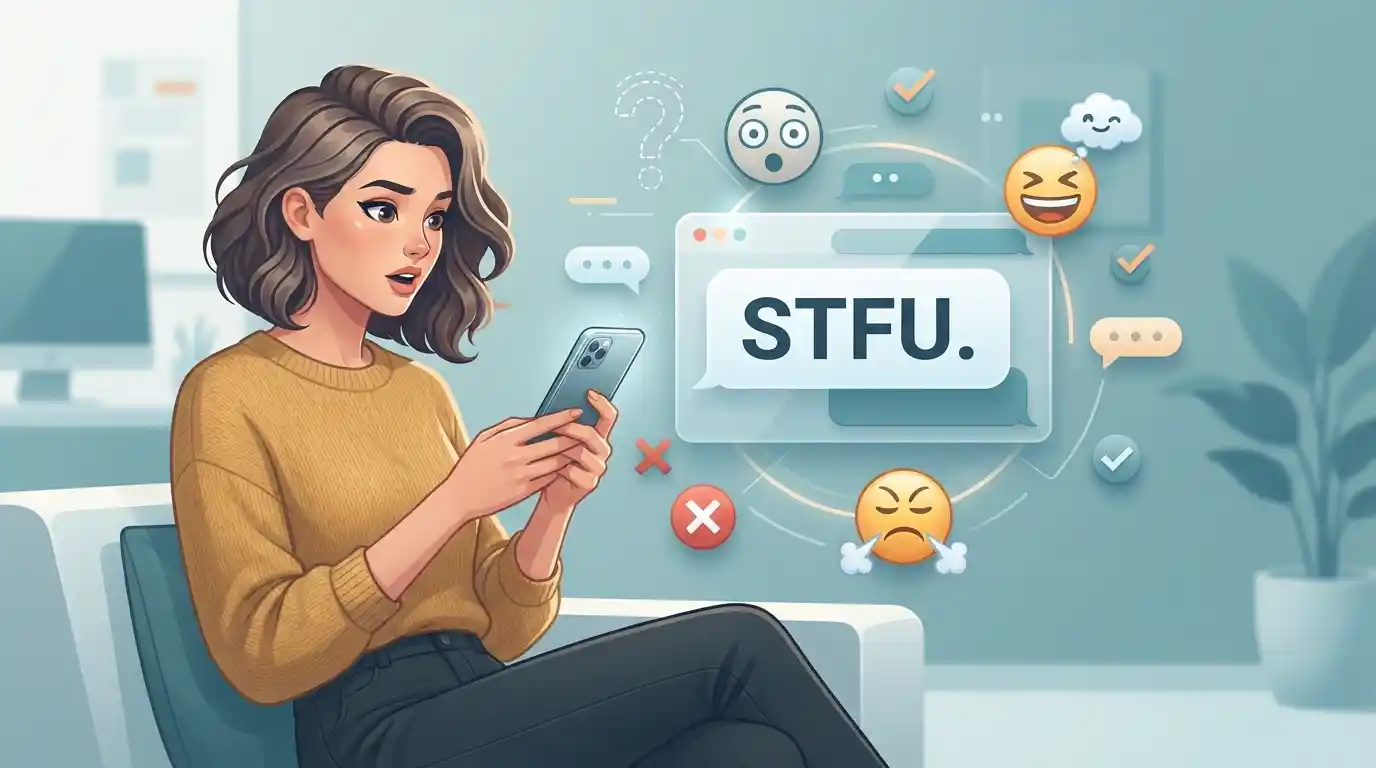
STFU means “shut the f* up” in text messages and online communication.** It is an informal and often rude abbreviation used to tell someone to stop talking, though its tone can range from genuinely angry to joking among close friends.
Key Takeaways
- STFU stands for “shut the f* up.”**
- It is a common form of text slang and internet slang.
- The meaning can sound angry, rude, playful, or sarcastic, depending on context.
- Friends may use it jokingly, but it can be offensive when directed seriously at someone.
- Punctuation, emojis, the conversation, and your relationship with the sender can change the tone.
- STFU is generally not appropriate for professional or formal communication.
STFU Meaning in Text
In texting, STFU means “shut the f* up.”** It is a blunt abbreviation used to tell someone to stop talking or to react strongly to something they said.
STFU is a form of texting shorthand, internet slang, and messaging abbreviation. You may see it in text messages, DMs, group chats, social media comments, gaming chats, and other casual online communication.
The phrase can have very different tones. For example, a friend might say “STFU 😂” after hearing surprising news as a playful reaction. However, “STFU” during an argument is more likely to sound hostile or disrespectful.
Because the full phrase contains profanity, context matters a lot.
What Does STFU Stand For?
STFU stands for “shut the f* up.”**
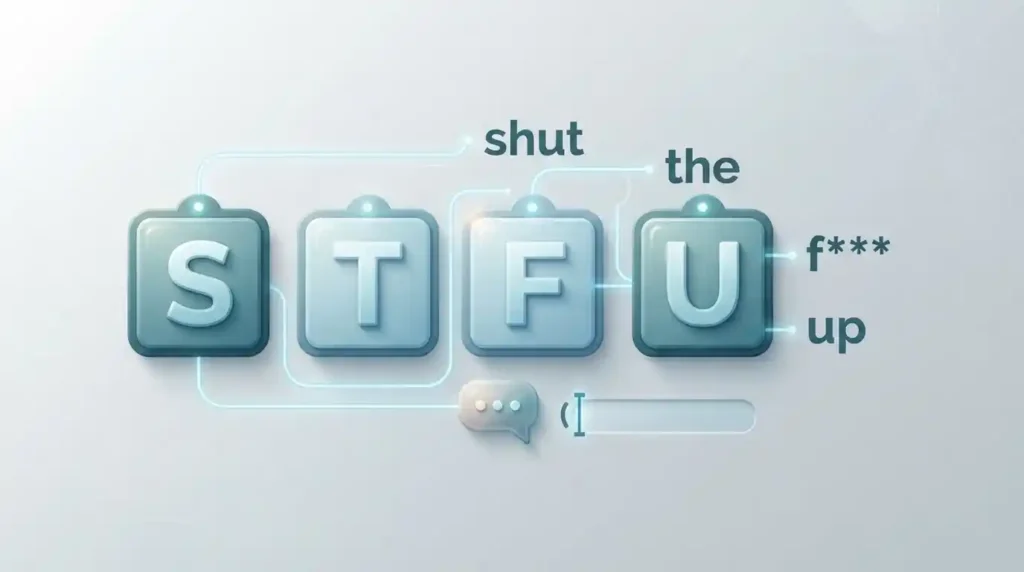
It is an initialism made from the first letters of each word. The abbreviation is commonly used online to shorten a phrase that would otherwise sound more direct and harsh.
Although people sometimes write the phrase with the profanity censored, the standard slang meaning of STFU refers to the same expression.
How Is STFU Used?
STFU is mainly used in casual digital conversations. Its meaning depends heavily on why and how it is being said.
In Text Messages
Someone may use STFU to tell another person to stop talking or to show a strong reaction.
Example:
“STFU, you actually met her?”
In this example, the sender may be expressing surprise rather than literally telling the person to be quiet.
In DMs and Group Chats
Friends sometimes use STFU jokingly when reacting to unexpected, exciting, or unbelievable information.
Example:
“STFU 😂 You got tickets?”
The laughing emoji helps show that the reaction is likely playful.
On Social Media
STFU can appear in comments or replies as a reaction to a surprising post, joke, rumor, or announcement.
Example:
“STFU, this is the funniest thing I’ve seen today.”
However, in an argument, the same abbreviation can be used as an insult or an aggressive dismissal.
In Gaming and Online Chats
In fast-moving gaming conversations, STFU may be used jokingly between friends or seriously during an argument. Tone is often harder to judge in short messages, so the surrounding conversation matters.
STFU in Different Contexts
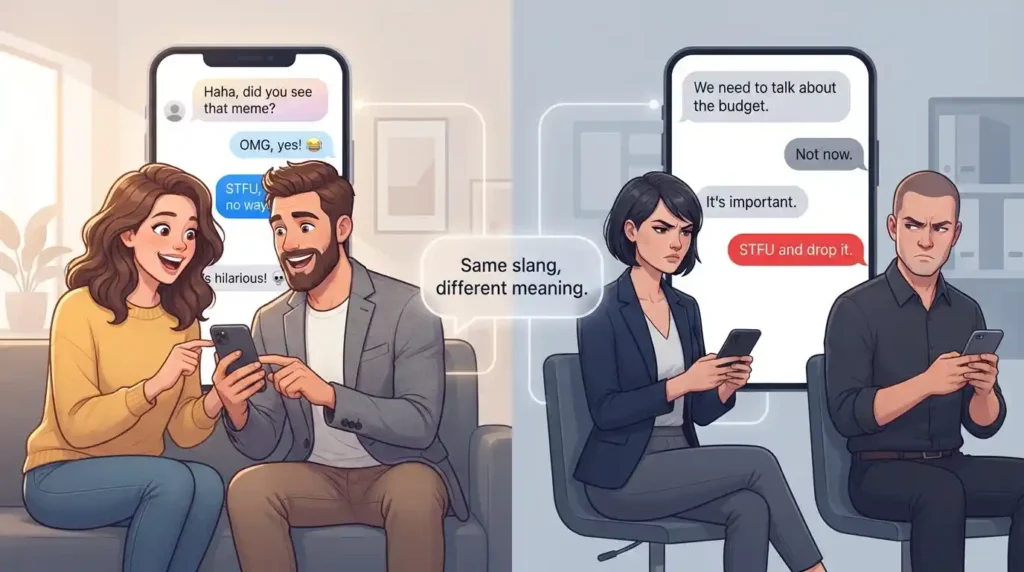
The letters STFU usually have the same basic meaning, but the intended tone can change significantly.
From a Friend
A friend may say “STFU 😂” after hearing something surprising or unbelievable. Among close friends, it can be playful shorthand for reactions like “No way!” or “I can’t believe it!”
Still, not everyone finds the phrase funny, so the relationship and conversation matter.
From a Guy or Girl
The gender of the sender does not automatically change what STFU means. It still refers to “shut the f*** up.”
To understand the tone, look at the conversation, punctuation, emojis, and the relationship between the people involved.
From a Crush or Someone You Like
STFU by itself does not prove flirting or romantic interest.
Someone might use it playfully after hearing exciting news, but the same phrase could also be rude or dismissive. The rest of the conversation provides more useful clues than the abbreviation alone.
In a Relationship
Partners may jokingly say STFU during playful conversations, especially when reacting to something surprising.
During an argument, however, it can sound disrespectful or hostile. Context and the way the couple normally communicates are important.
In an Argument
When used without playful wording, emojis, or a friendly context, STFU is usually a direct and rude way of telling someone to stop talking.
For example:
“STFU. I’m done talking about this.”
That tone is very different from a playful message between friends.
Real Chat Examples
Here are some realistic ways STFU can appear in text conversations:
- “STFU 😂 You really got backstage passes?”
- “STFU, no way that actually happened.”
- “Wait, STFU. You’re moving to New York?”
- “STFU 😭 That story is wild.”
- “You did what? STFU 😂”
- “STFU, I’m trying to listen.”
- “Can you STFU for one minute?”
- “STFU 😂 I was literally about to say the same thing.”
- “STFU, that’s not even funny.”
- “STFU 😭 I can’t believe you remembered that.”
- “Oh my gosh, STFU! You met them?”
- “STFU with the spoilers.”
- “STFU 😂 There’s no way you believed that.”
- “Bro, STFU. We’re trying to figure this out.”
- “STFU 😭 You bought the whole thing?”
- “STFU, I’m being serious right now.”
- “Wait… STFU. Is this actually true?”
- “Please STFU, the movie is starting.”
- “STFU 😂 Why would you say that?”
These examples show why context matters. The abbreviation can express surprise and amusement, but it can also be a serious command to stop talking.
How to Reply to STFU
Your reply should depend on whether the message sounds playful or genuinely rude.
Casual Replies
- “Okay, okay 😂”
- “My bad.”
- “Fair enough.”
- “I hear you.”
- “Alright, I’ll stop.”
Friendly Replies
- “😂 Why are you yelling at me?”
- “No way, you’re not serious.”
- “You know you wanted to hear the rest 😂”
- “Okay, but let me finish.”
- “I can’t help it 😭”
Funny Replies
- “I’ve been muted by the committee.”
- “My speaking privileges have been revoked 😂”
- “Too late, the story has already started.”
- “I respectfully decline 😂”
- “And yet, I have more to say.”
Neutral Replies
If the message feels serious or hostile, a calm response may work better:
- “Okay.”
- “Let’s talk later.”
- “I don’t want to argue.”
- “Please don’t speak to me like that.”
- “Let’s take a break from this conversation.”
You do not have to respond playfully if STFU makes you uncomfortable.
What Tone Does STFU Have?
STFU is generally a strong and informal expression. Its tone can include:
- Rude or aggressive: when seriously telling someone to stop talking
- Playful: when joking with close friends
- Sarcastic: when reacting to something unbelievable
- Surprised: especially with emojis or excited punctuation
- Frustrated: during disagreements or annoying situations
Compare these two messages:
“STFU 😂 You got front-row seats?!”
This likely expresses surprise or excitement.
“STFU. I’m tired of hearing this.”
This sounds serious and hostile.
The abbreviation itself does not always reveal the sender’s exact emotion. The surrounding messages are important.
Is STFU Rude or Offensive?
Yes, STFU can be rude or offensive. It is based on a profanity-containing phrase and can sound disrespectful, especially when used seriously.
With Friends
Close friends may use STFU jokingly, but that depends on the friendship. Some people are comfortable with this type of humor, while others are not.
On Social Media
STFU can appear in jokes, reactions, and arguments. Because readers cannot always hear tone, it may be easier to misunderstand in written comments.
At School
It may be inappropriate when speaking to teachers, staff, or other people in formal situations. Even among classmates, the phrase can cause problems if it is taken seriously.
At Work or in Professional Communication
STFU is generally inappropriate in professional messages, emails, meetings, or workplace chats. It can easily sound insulting and disrespectful.
In Formal Writing
Avoid STFU in formal writing. It is casual internet slang and does not fit most professional or academic communication.
Common Mistakes About STFU
Assuming It Is Always a Joke
STFU can be playful, but it can also be genuinely rude. Do not assume the sender is joking without looking at the conversation.
Ignoring Context
Emojis, punctuation, previous messages, and the relationship between people can completely change how the abbreviation feels.
Assuming It Has Romantic Meaning
STFU does not automatically mean flirting, attraction, or romantic interest. A playful conversation may involve the phrase, but the slang itself does not prove anything about someone’s feelings.
Using It in Formal Communication
STFU is highly informal and includes profanity. It is not a good choice for professional or formal situations.
Confusing It With a Softer Reaction
Sometimes people use “STFU 😂” similarly to “No way!” when reacting to surprising news. However, the literal phrase remains much stronger and can still offend someone.
STFU and Related Slang
| Term | Meaning | Common Use |
|---|---|---|
| GTFO | Get the f*** out | Strong disbelief or telling someone to leave |
| WTF | What the f*** | Surprise, confusion, or disbelief |
| OMG | Oh my God / Oh my gosh | Surprise or excitement |
| IDK | I don’t know | Casual uncertainty in texting |
| LMK | Let me know | Asking someone for information or an update |
These abbreviations are all common in informal online communication, but they do not have the same meaning or level of intensity as STFU.
People Also Ask About STFU Meaning in Text
Is STFU a bad word?
STFU can be considered rude because it represents a profanity-containing phrase. Whether it is offensive depends on the tone, relationship, and situation, but it is best avoided in formal or professional communication.
What does STFU mean from a friend?
From a friend, STFU may be a joking reaction to something surprising, especially when paired with emojis or laughter. It can also be serious, so the surrounding conversation matters.
What does “STFU 😂” mean?
When STFU is followed by a laughing emoji, it often softens the message and may show surprise, disbelief, or playful humor. However, the exact tone still depends on the conversation.
Does STFU mean someone is angry?
Not always. STFU can be used jokingly, but in an argument or without playful context, it may express anger, frustration, or irritation.
What does STFU mean in a text from a crush?
STFU still means “shut the f*** up,” but the tone may be playful depending on the conversation. The abbreviation alone does not confirm flirting or romantic interest.
Is STFU appropriate at work?
Generally, no. Because it is based on profanity and can sound insulting, STFU is not appropriate for most professional workplace communication.
How do you respond when someone says STFU?
If the person is joking, you can reply playfully. If the message feels rude or hostile, a calm response, a boundary, or ending the conversation may be more appropriate.
Conclusion
STFU means “shut the f* up” in text and online communication.** It is an informal internet slang abbreviation that can sound rude, angry, playful, sarcastic, or surprised depending on the context.
The full phrase contains profanity, so STFU is best reserved for casual conversations where the tone is clearly understood. Emojis, punctuation, previous messages, and your relationship with the sender can all affect how the abbreviation should be interpreted. In professional or formal settings, it is generally better to avoid using it.

Mila Parker is a writer focused on captions and quotes that capture experiences, emotions, and memorable moments. Her three years of work include creating material around travel, lifestyle, relationships, events, social media, entertainment, and aesthetic themes. Mila examines tone, refines phrasing, and structures captions to suit different contexts, occasions, and visual styles.