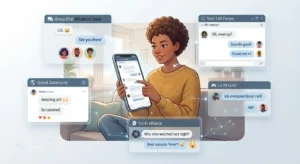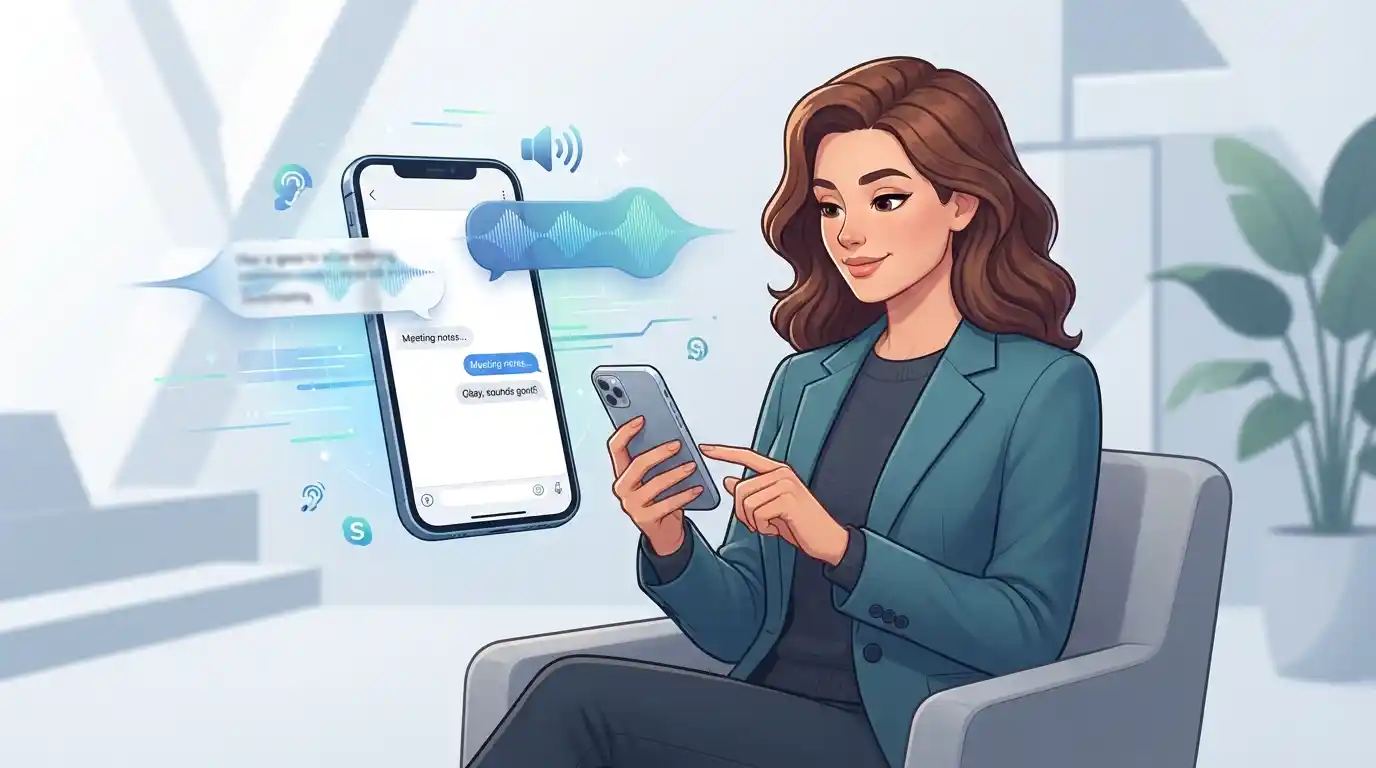
TTS usually means “text-to-speech” in text, chat, and online communication. It refers to technology that converts written words into spoken audio. In casual messages, TTS can also mean “time to sleep,” but that meaning depends heavily on context.
Key Takeaways
- TTS most commonly stands for “text-to-speech.”
- Text-to-speech technology reads written text aloud using a synthesized voice.
- TTS is commonly discussed in apps, gaming, accessibility tools, videos, and online content.
- In casual texting, TTS may sometimes mean “time to sleep.”
- The surrounding conversation is important because TTS does not have one universal slang meaning.
- In formal writing, spelling out the intended meaning is usually clearer than using TTS by itself.
TTS Meaning in Text
The most established meaning of TTS is “text-to-speech.” It is a technology or feature that turns written text into spoken audio.
For example, someone might say:
“Does this app have TTS?”
They are usually asking whether the app can read text aloud.
TTS is an abbreviation rather than a traditional texting slang expression. You may see it in text messages, DMs, gaming chats, social media discussions, accessibility conversations, and technology-related posts.
The meaning is generally neutral and informal. It does not automatically communicate flirting, sarcasm, anger, or romantic interest.
TTS as “Time to Sleep”
In a purely casual conversation, TTS can sometimes be used as shorthand for “time to sleep.” For example:
“It’s TTS lol, I’m exhausted.”
Here, the person is saying that it is time for them to go to sleep.
This usage is much more dependent on context than the technology meaning. If someone is discussing an app, voice, audio, or gaming feature, text-to-speech is the more natural interpretation.
What Does TTS Stand For?
TTS stands for “text-to-speech.”
Text-to-speech is a technology that converts written text into spoken output. Modern TTS systems can generate voices that sound increasingly natural and can be used for reading messages, accessibility features, navigation, videos, games, and other digital content.
In an informal sleep-related message, TTS may instead be intended as “time to sleep.” That is a contextual shorthand rather than the primary technical expansion.
How Is TTS Used?
TTS can appear in several types of online communication.
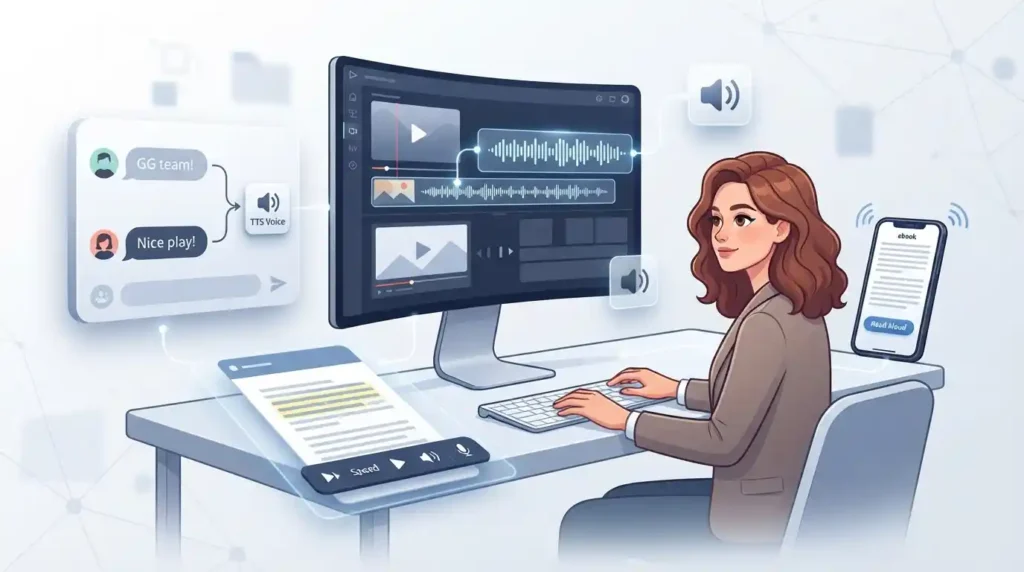
Text Messages
Someone might mention TTS when talking about having a message or document read aloud.
Example:
“Can you turn on TTS? I don’t want to read all of this.”
DMs and Group Chats
In online conversations, people may use TTS when discussing accessibility, apps, bots, or voice features.
Example:
“Is the TTS working for anyone else?”
Social Media
Creators and users may discuss TTS when referring to narrated videos, automated voices, or accessibility tools.
Example:
“I used TTS for the narration in this video.”
Gaming
TTS is especially relevant when a game, streaming tool, or chat system converts written messages into spoken audio.
Example:
“The stream has TTS enabled, so chat messages get read aloud.”
Accessibility
TTS can help people access written digital content through spoken output. It can be useful for reading webpages, messages, documents, and other text-based material.
TTS in Different Contexts
Context is the best way to determine what someone means by TTS.
From a Friend
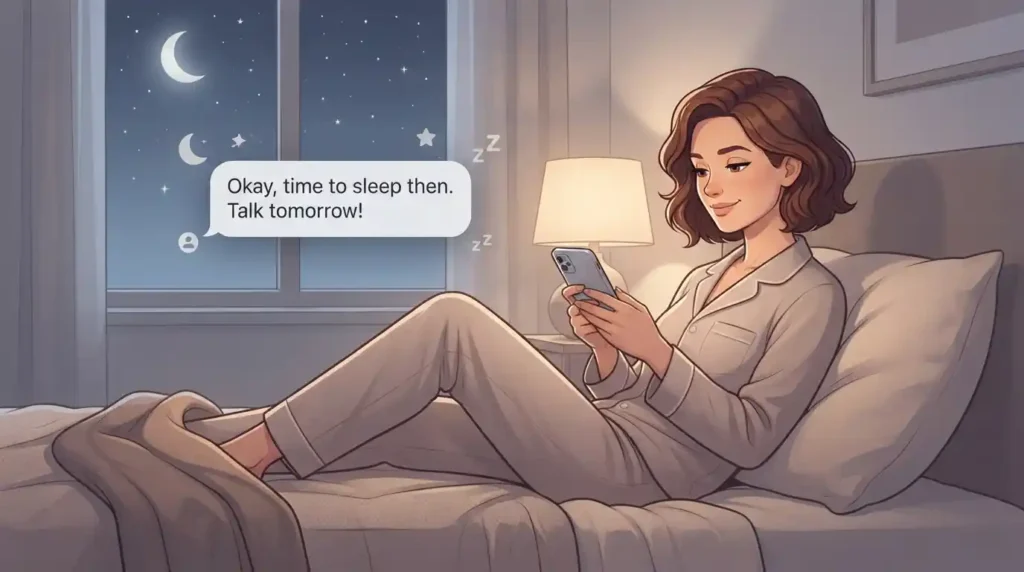
If a friend says:
“TTS tonight 😂”
they may be using TTS as “time to sleep.” The surrounding conversation should confirm that interpretation.
From a Guy or Girl
The meaning does not change simply because the sender is a guy or a girl. If someone uses TTS while discussing an app or voice feature, it likely refers to text-to-speech. If you’re talking about being tired or going to bed, “time to sleep” may make more sense.
From a Crush
TTS by itself does not prove romantic interest. If the conversation is about going to bed, the sender may simply mean “time to sleep.”
In Dating or a Relationship
The same rule applies. Look at the complete conversation rather than treating the abbreviation as a hidden romantic signal.
In a Group Chat
A group discussing a game, bot, livestream, or accessibility feature is more likely to mean text-to-speech.
In Social Media Comments
A comment about a video voice or automated narration may use TTS to refer to text-to-speech.
Real Chat Examples
Here are realistic examples showing how TTS can work in different contexts:
- “This app has really good TTS.”
→ Text-to-speech. - “Can you enable TTS in the settings?”
→ Text-to-speech. - “The TTS voice sounds surprisingly natural.”
→ Text-to-speech. - “I use TTS when I’m tired of reading.”
→ Text-to-speech. - “Does this game support TTS?”
→ Text-to-speech. - “The streamer has TTS turned on.”
→ Text-to-speech. - “Which TTS voice did you use?”
→ Text-to-speech. - “TTS made the video easier to narrate.”
→ Text-to-speech. - “I’m testing a new TTS tool.”
→ Text-to-speech. - “Why is the TTS voice so robotic?”
→ Text-to-speech. - “It’s TTS, I’m going to bed.”
→ Time to sleep. - “Okay, TTS for me 😴.”
→ Time to sleep. - “It’s late. TTS lol.”
→ Time to sleep. - “TTS, talk tomorrow.”
→ Time to sleep. - “I need TTS after that long day.”
→ Likely time to sleep, depending on the conversation. - “Turn the TTS off for a second.”
→ Text-to-speech. - “The TTS reads the chat automatically.”
→ Text-to-speech. - “I’m making a video with TTS narration.”
→ Text-to-speech. - “Do you know a good TTS app?”
→ Text-to-speech. - “TTS tonight, I’m completely worn out.”
→ Time to sleep.
How to Reply to TTS
Your reply depends on what the sender means.
Casual Replies
If TTS means “time to sleep”:
- “Yeah, probably a good idea 😂”
- “Same here, I’m tired.”
- “Good night!”
If it means text-to-speech:
- “Yeah, it works pretty well.”
- “I haven’t tried it yet.”
- “Which TTS tool are you using?”
Friendly Replies
- “Get some rest!”
- “Sleep well!”
- “Hope you have a good night.”
- “Yeah, tomorrow works.”
Funny Replies
- “Your bed is calling 😂”
- “Go recharge your battery 😴”
- “Okay, bedtime it is.”
Neutral Replies
- “Got it.”
- “Okay, talk tomorrow.”
- “Sure.”
- “Thanks for letting me know.”
Flirty/Relationship Replies
TTS does not inherently have a romantic meaning, so a flirty response only makes sense if the broader conversation is already romantic. For example:
- “Good night 😊”
- “Sleep well, talk tomorrow.”
- “Sweet dreams!”
What Tone Does TTS Have?
The tone depends on which meaning is intended.
When TTS means “text-to-speech,” the tone is usually:
- Neutral
- Informal
- Technical
- Matter-of-fact
When TTS means “time to sleep,” it can sound:
- Casual
- Friendly
- Playful
- Informal
The abbreviation itself does not automatically indicate sarcasm, flirting, anger, or affection.
Is TTS Rude or Offensive?
No, TTS is generally not rude or offensive.
When it means “text-to-speech,” it is a neutral technology abbreviation. When used as “time to sleep,” it is also generally harmless casual shorthand.
TTS is fine in casual conversations, chats, and social media. However, in school assignments, workplace documents, or formal communication, spelling out text-to-speech is usually clearer unless the abbreviation has already been introduced.
Other Meanings of TTS
TTS in Technology
Text-to-speech is the major technology-related meaning of TTS. It describes systems that transform written text into spoken audio.
You may encounter TTS in accessibility software, operating systems, apps, games, virtual assistants, video creation tools, and online services.
TTS in Casual Texting
Some people may use TTS as “time to sleep.” This meaning is informal and should be interpreted from the surrounding conversation rather than assumed automatically.
Common Mistakes About TTS
Assuming TTS Always Means “Time to Sleep”
Because TTS can be used casually in a sleep-related conversation, it can be tempting to treat that as its only texting meaning. The technology meaning is much more established.
Assuming TTS Is Always About Technology
The opposite mistake can happen when someone is clearly ending a late-night conversation. In that setting, “time to sleep” may be intended.
Assuming TTS Has a Romantic Meaning
TTS does not inherently mean that someone likes you, is flirting, or wants to end a relationship. Those interpretations require context beyond the abbreviation.
Treating Every Abbreviation as Slang
TTS is often an abbreviation for a technology rather than slang. Calling every use of TTS “texting slang” can make the meaning less clear.
TTS and Related Slang
| Term | Meaning | Common Use |
| TTS | Text-to-speech | Voice technology and digital content |
| TTYL | Talk to you later | Ending a casual conversation |
| GTG | Got to go | Leaving a chat |
| GN | Good night | Ending a nighttime conversation |
| GTS | Go to sleep / Google that shit, depending on context | Context-dependent online shorthand |
People Also Ask About TTS
Does TTS mean text-to-speech?
Yes. TTS most commonly stands for “text-to-speech.” It refers to technology that converts written text into spoken audio.
Can TTS mean “time to sleep” in texting?
Yes, TTS can be used informally to mean “time to sleep.” Because this is context-dependent, the surrounding conversation should be used to determine whether that meaning fits.
Is TTS a texting abbreviation?
TTS can appear in texting, but its best-established meaning is the technology abbreviation “text-to-speech.” In casual conversations, some people may also use it as shorthand for “time to sleep.”
What does TTS mean on social media?
On social media, TTS usually refers to text-to-speech, especially when people are discussing automated narration, generated voices, accessibility, or video creation.
What does TTS mean in gaming?
In gaming, TTS generally means text-to-speech when written chat or other text is converted into spoken audio. The exact feature depends on the game or platform.
Does TTS mean someone is flirting?
No. TTS does not inherently indicate flirting or romantic interest. If someone uses it in a conversation with you, consider the topic, previous messages, and overall tone before interpreting it.
Is TTS appropriate for work?
The abbreviation is generally harmless, but “text-to-speech” is clearer in professional communication, especially when the reader may not know the abbreviation.
Conclusion
TTS most commonly means “text-to-speech” and refers to technology that turns written text into spoken audio. In casual nighttime conversations, it can also mean “time to sleep.”
The tone is generally neutral or casual, and TTS is not inherently rude, romantic, or offensive. When the meaning is unclear, use the conversation topic and surrounding wording to determine which interpretation makes sense.

Mila Parker is a writer focused on captions and quotes that capture experiences, emotions, and memorable moments. Her three years of work include creating material around travel, lifestyle, relationships, events, social media, entertainment, and aesthetic themes. Mila examines tone, refines phrasing, and structures captions to suit different contexts, occasions, and visual styles.